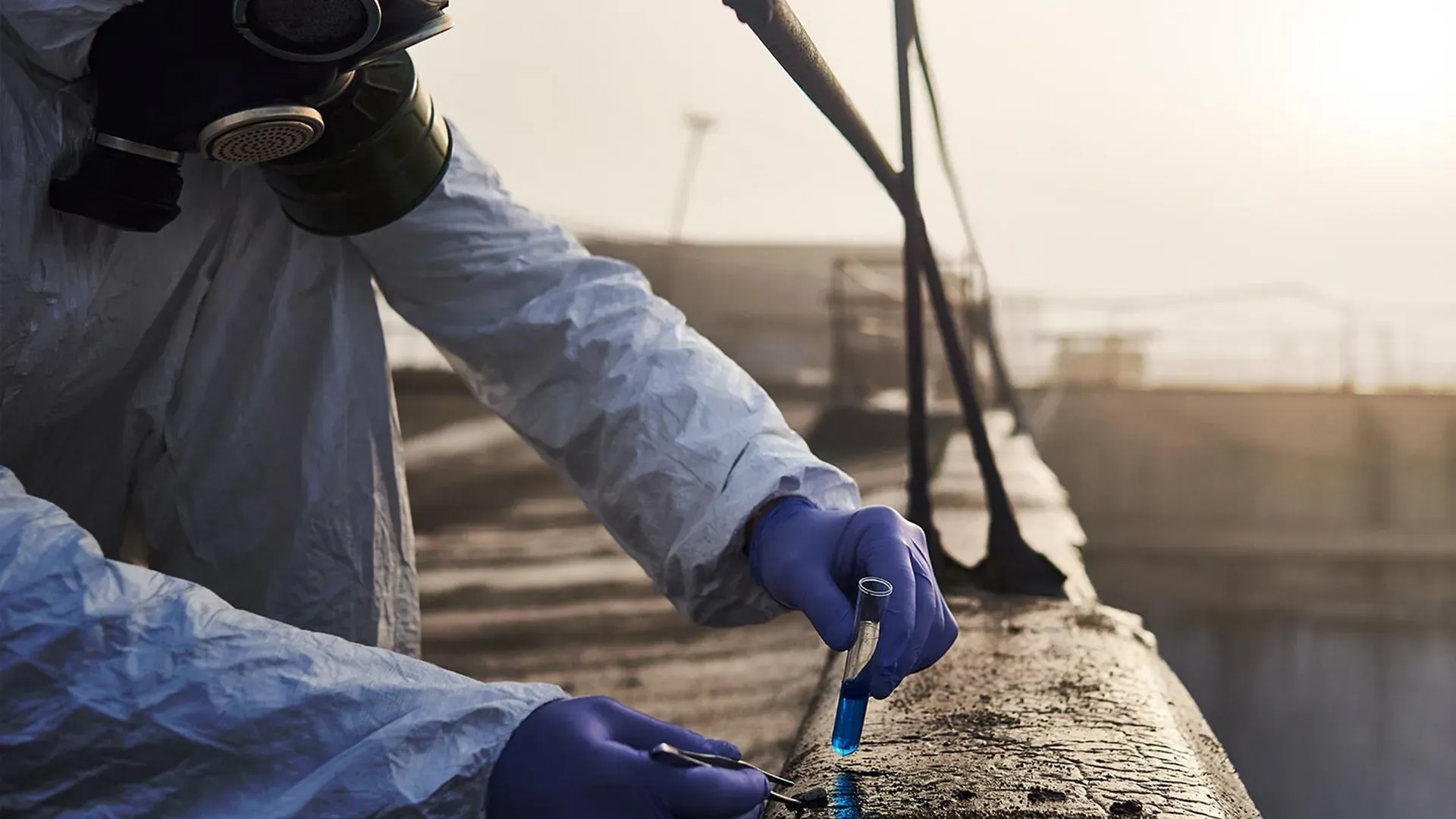
Wildfire damage is not always obvious. A building may never catch fire, but smoke and fine particles can still enter indoor spaces through doors, windows, small openings, and HVAC systems. Ash and related post-fire debris may also become part of the property assessment, depending on site conditions.
That is where many disputes begin. After a wildfire, the question is not only whether the property burned. The harder question is what the smoke or ash left behind, where it traveled, and whether the evidence supports the claim.
Attorneys, insurers, property owners, and remediation teams often need more than a quick visual inspection or a report of smoke odor.
This guide explains how industrial hygienists assess wildfire-related smoke, soot, and ash contamination, why their methods matter, and how their findings can support litigation, insurance disputes, cleanup decisions, and expert testimony.
Why Wildfire Smoke Contamination Matters
Wildfire smoke is a complex mix of gases and fine particles. Its impact depends on what burned, how smoke moved, how dense the smoke was, and whether particles entered the building.
Visual inspection alone often is not enough. A room may smell smoky even when soot is hard to see. A surface may look dusty, but that dust could come from ordinary indoor dust, smoke, traffic, cooking, combustion sources, or another source.
That distinction matters when attorneys evaluate damage, cleanup scope, or causation. The evidence should help attorneys evaluate whether wildfire smoke, soot, or ash affected the property in a way that supports the claimed damage, remediation cost, or cleanup scope.
Common Wildfire Smoke, Soot, and Ash Contaminants
No two wildfire sites are exactly alike. What burned, how close the property was to the fire, how smoke traveled, and how the building was ventilated can all affect what an industrial hygienist needs to evaluate.
Fine Particulate Matter
Fine particulate matter, including PM2.5 and PM10, can enter indoor spaces during wildfire smoke events. Fine particles matter because they are small enough to reach deep into the respiratory system. When particulate testing is appropriate, an industrial hygienist can interpret results alongside site conditions, outdoor data, possible indoor sources, and building history.
Soot and Ash
Ash can settle on indoor and outdoor surfaces, and soot may also be evaluated when site conditions support it. Depending on the property, post-fire debris may raise concerns involving building areas, materials, contents, or systems.
Volatile Organic Compounds
Post-fire indoor air quality concerns may include volatile organic compounds, often called VOCs, especially when odors or other indoor air quality concerns warrant further evaluation. These results should be interpreted with care because VOCs can also come from paints, adhesives, cleaning products, fuels, and building materials.
Metals and Other Hazardous Materials
When homes, older structures, or other materials burn, ash and dust may involve hazardous materials, including metals or other particulate hazards. Depending on the site, an industrial hygienist may evaluate metals, asbestos-containing material, silica-containing dust, or other contaminants that affect cleanup, worker safety, disposal, and later claim evaluation.
How Industrial Hygienists Assess Smoke, Soot, and Ash
Once smoke, soot, or ash becomes part of a claim, the next question is how to prove it. Industrial hygienists do not rely on odor or appearance alone. They use a structured process that connects site observations to testing, documentation, and interpretation.
In a legal or insurance dispute, a well-planned assessment often focuses on:
- Reviewing the wildfire event, property history, building use, and cleanup timeline
- Inspecting affected and less-affected areas for residue, odor sources, and migration pathways
- Evaluating HVAC systems, filters, vents, and other building areas where particles may collect
- Collecting air, surface, bulk, or dust samples with clear documentation and chain-of-custody controls, which track how samples are collected, labeled, and handled to protect their integrity as evidence
- Comparing laboratory findings with site conditions, possible non-wildfire sources, and known testing limits
The key question is not just whether smoke was present. It is whether the evidence shows where it went, what it left behind, and whether the findings support the claim.
As a practical litigation matter, a broad remediation opinion may be easier to challenge if it rests on limited sampling without a clear explanation of why the selected locations were enough.
Why the Testing Record Matters in Wildfire Claims
In a wildfire claim, the testing record can become just as important as the contamination itself. These disputes often involve causation, cleanup costs, property damage, health concerns, habitability issues, and remediation scope.
In litigation, thin, inconsistent, or poorly explained sampling can shift attention from the presence of residue to the reliability of the expert’s work.
Industrial hygienists can help attorneys answer practical questions, such as:
- Did wildfire smoke, soot, or ash affect the property?
- Were the sampling locations, methods, and chain-of-custody controls appropriate?
- Did the data support the cleanup, clearance, or claim decision?
A strong report identifies what was tested, why those locations were selected, what methods were used, what limitations apply, and how the results support the opinion.
What Can Make a Wildfire Contamination Opinion Vulnerable?
Even when contamination concerns are real, an opinion can become harder to defend if the testing record has gaps. From a litigation perspective, common problems may include:
- Relying on too little sampling to support broad conclusions
- Failing to distinguish wildfire residue from ordinary dust, smoke, cooking residue, combustion-related particles, or unrelated contamination
- Using inconsistent sampling methods across affected and comparison areas
- Testing after cleanup or restoration has changed the evidence
- Overstating health risks, medical causation, or remediation needs without adequate data or qualifications
Timing matters. Once cleanup begins, evidence can disappear or change. Early involvement from a qualified industrial hygienist can help preserve the record, guide sampling decisions, and reduce later disputes over what the testing actually proves.
What Attorneys Should Look for in an Industrial Hygienist
Attorneys benefit from experts who understand both the science and how the evidence may be challenged in litigation. A strong industrial hygienist should know how to assess post-fire contamination while also explaining the work in a clear, defensible way.
When vetting an industrial hygienist for a wildfire dispute, attorneys may want to consider:
- Experience with wildfire smoke, soot, ash, or post-fire contamination assessments
- Knowledge of indoor air quality, building systems, HVAC pathways, sampling, and laboratory methods
- Ability to design a sampling plan that fits the property, the available evidence, and the legal question
- Clear reporting that explains findings, assumptions, limitations, and litigation relevance
The right expert should not simply confirm a preferred outcome. The expert should help attorneys understand where the data supports the claim and where it does not.
How Industrial Hygienists Support Insurance and Property Damage Claims
Industrial hygienists can help clarify whether smoke, soot, or ash affected the property, what areas need further evaluation, and whether cleanup recommendations are supported by the evidence.
In legal and insurance disputes, industrial hygiene findings may help attorneys evaluate coverage questions, remediation scope, clearance issues, property damage, habitability concerns, and source disputes.
A sound assessment can also help attorneys evaluate whether the claimed damage is tied to the wildfire event, whether the proposed remediation is reasonable, and whether the expert opinion rests on reliable methods.