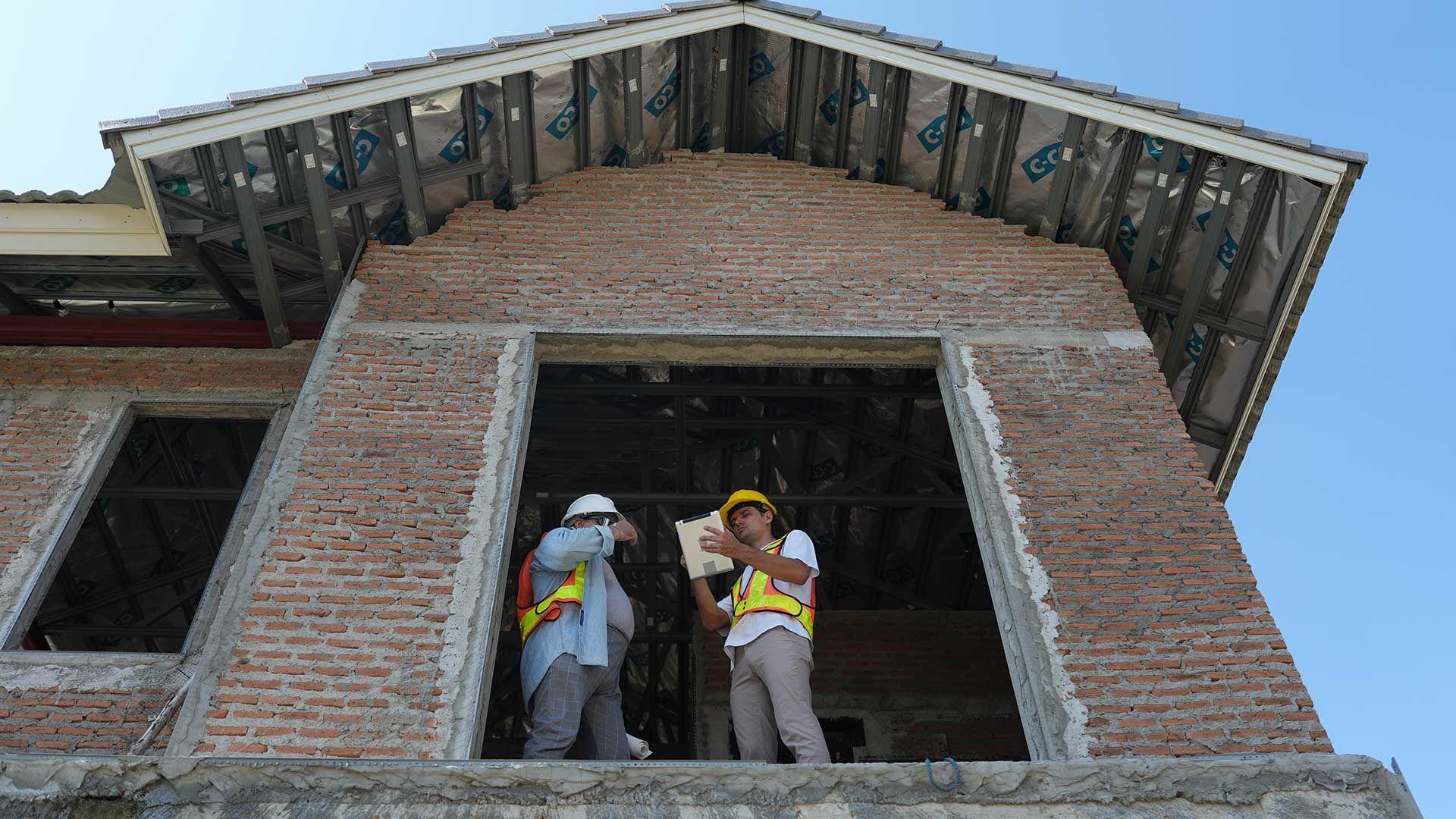
In California construction defect litigation, using a commonly recognized inspection or testing method does not by itself establish that the resulting expert opinion has an adequate evidentiary foundation. A well-supported analysis uses methods suited to the condition, documents the investigation, identifies applicable code provisions or technical benchmarks when relevant, and explains how the evidence supports the opinion.
In California state-court proceedings, Evidence Code sections 720, 801, and 802 address expert qualifications and the permissible subject matter and foundation of expert opinions. In Sargon Enterprises, Inc. v. University of Southern California, the California Supreme Court explained that a trial court may examine whether the materials on which an expert relies actually support the expert's reasoning and may exclude opinions based on unsupported reasoning or speculation. In federal court, expert-testimony admissibility is governed by the Federal Rules of Evidence, principally Rule 702, and applicable federal case law.
This guide explains how construction defect experts investigate alleged defects in California, how common testing and documentation methods are used, and what attorneys should evaluate when considering the foundation and admissibility of expert opinions.
California Standards That Guide Construction Defect Analysis
As part of planning and interpreting the investigation, the expert should identify the code provisions, project requirements, contractual criteria, and technical standards relevant to the assigned analysis. Counsel may need to address disputed questions about which law or legal requirements govern.
Applying a current standard to older work without first determining whether it applied can lead to an unreliable comparison.
California's Right to Repair Act
California Civil Code sections 895 through 945.5, commonly called the Right to Repair Act or SB 800, establish performance standards and prelitigation procedures for covered residential construction claims. Section 896 applies the framework to original construction intended to be sold as an individual dwelling unit. For condominium conversions, the title does not apply to or supersede other statutory or common law. Sections 910 through 938 govern the prelitigation process, and section 938 limits the title to new residential units where the seller signed the purchase agreement on or after January 1, 2003.
In McMillin Albany LLC v. Superior Court, the California Supreme Court held that the Act's procedures apply to covered property-damage construction defect claims and described the Act as the virtually exclusive remedy for covered economic-loss and property-damage claims, subject to statutory exceptions, including preserved personal-injury claims.
Section 942 provides that, subject to section 945.5 defenses, a homeowner does not need an additional showing of causation or damages to establish a Chapter 2 standard violation related to the original construction. Section 936 separately addresses general contractors, subcontractors, material suppliers, individual product manufacturers, and design professionals, including whether they caused all or part of a violation through negligence or breach of contract. Its negligence standard does not apply to claims for which strict liability would apply.
California Building Standards Code
Experts should identify the applicable edition and part of the California Building Standards Code, Title 24 of the California Code of Regulations. Depending on the project and issue, relevant provisions may appear in the California Building Code, Residential Code, Electrical Code, Mechanical Code, Plumbing Code, or another part of Title 24.
The 2025 California Building Standards Code generally became effective January 1, 2026. In a forensic investigation, however, the expert should identify the provisions and other requirements that applied to the work being evaluated.
Plans, specifications, approved details, manufacturer instructions, contracts, inspection records, and applicable industry standards may also provide technical context. The expert should explain why a benchmark applies rather than treating every deviation as an automatic legal conclusion.
Expert Investigation Methods and Admissibility in California Construction Defect Cases
A well-founded construction defect investigation should use methods suited to the issue the expert has been asked to evaluate. In California state court, Evidence Code section 720 addresses expert qualifications, while sections 801 and 802 address the subject matter and basis of expert opinions. Under Sargon, the court may examine whether the materials relied upon support the reasoning connecting the evidence to the opinion. In federal court, admissibility is evaluated under Federal Rule of Evidence 702 and applicable federal precedent.
Useful indicators include:
- A clearly defined scope and issue being evaluated
- Use of a test or inspection procedure appropriate to that issue
- Identification of the applicable code provisions and any specifications, standards, or other benchmarks relied upon
- Documentation of equipment, measurements, locations, conditions, and test settings when relevant
- Preservation of photographs, notes, readings, and other underlying data
- Explanation of assumptions and limitations
- Consideration of reasonable alternative explanations
- A logical connection between observations, testing, analysis, and opinion
Repeatability can be valuable, but not every forensic examination can be reproduced under identical conditions. The expert should document enough information for another qualified person to understand what was done and evaluate the reasoning.
Core Construction Defect Investigation and Testing Methods
The appropriate method depends on the alleged defect and the information needed to evaluate it. An investigation may combine several techniques rather than relying on a single test.
Documented Visual Inspection and Project-Record Review
A site inspection can provide a starting point for construction defect analysis. The expert may document location, dimensions, visible deterioration, staining, cracking, displacement, prior repairs, and other relevant conditions, supported by identifiable photographs, measurements, instrument readings, and field notes.
The inspection should also be compared with relevant project records, which may include:
- Approved plans, specifications, and shop drawings
- Submittals, requests for information, and change orders
- Inspection and daily reports
- Product information and installation instructions
- Maintenance and repair records
- Prior photographs or testing
A visual observation can document an observable condition, but it may not establish what lies behind a finished surface or what caused the condition. The expert should distinguish direct observations from later inferences.
Moisture and Building-Envelope Investigation
Water-intrusion and building-envelope investigations may combine visual inspection, infrared thermography, moisture measurements, controlled water testing, selective openings, or other direct examination, depending on the assembly and disputed condition.
Infrared thermography can help identify surface-temperature patterns or anomalies that warrant further investigation, but those observations should be interpreted in context and, where moisture is suspected, evaluated together with direct measurements or other corroborating evidence. Building-envelope guidance from the National Institute of Standards and Technology and the National Institute of Building Sciences recognizes that enclosure investigations may involve multiple diagnostic and verification methods rather than reliance on a single observation.
For windows, doors, walls, and other enclosure components, the testing method should fit the assembly, installation, age, observed condition, and purpose of the investigation. Field water testing and other in-situ testing can provide useful information when procedures and test conditions are appropriately selected and documented. Current U.S. General Services Administration building standards identify building-enclosure commissioning and testing requirements addressing issues such as air and water infiltration and the detection of leaks or breaches in waterproofing systems.
The report should identify the method, test conditions, equipment, relevant results, and limitations that may affect interpretation.
Selective Openings and Material Examination
In some building-envelope and water-intrusion investigations, concealed conditions may require intrusive examination. Selective openings may reveal flashing, waterproofing, fasteners, framing, membranes, connections, or other conditions hidden behind finished surfaces.
Before an opening is made, the investigation team should document the preexisting condition and define the purpose of the examination. The expert should record what is exposed, preserve relevant samples when necessary, and distinguish observed conditions from conclusions drawn from them.
For SB 800 claims, Civil Code section 916 governs a builder's elected inspection and testing after notice of a claim. It requires the builder to bear inspection and testing costs, including damage caused by the inspection, and to restore the property to its pretesting condition within 48 hours. The statute does not label this process "destructive testing" or require intrusive openings in every case.
Testing should be coordinated with the procedures, agreements, discovery obligations, or orders governing the dispute.
Structural, Mechanical, Electrical, and Other System Analysis
Different alleged failures may call for different professional disciplines.
A structural investigation may involve evaluation of load paths, connections, foundations, framing, calculations, movement, cracking, or conformance with applicable design criteria. Mechanical, electrical, plumbing, roofing, drainage, or other system disputes may require specialized measurements, calculations, equipment testing, or manufacturer data.
The expert's qualifications should match the opinion being offered. California Evidence Code section 720 does not create a universal licensing requirement for all expert witnesses, but professional licensing laws apply separately to regulated professional practice. California separately regulates the practice of civil, electrical, and mechanical engineering.
Repair Scope and Cost Analysis
Repair-cost analysis may be relevant when claimed damages include the cost of correcting an identified condition. A detailed estimate should be tied to a defined repair scope.
For litigation review, a clear estimate generally identifies:
- The component or condition being repaired
- The proposed repair method
- Quantities and assumptions
- Labor, material, equipment, access, and demolition costs as applicable
- The source and date of pricing information
- Necessary restoration
- Material exclusions or contingencies
The estimator should explain how the proposed repair responds to the identified condition and state the assumptions behind the selected approach, particularly when other reasonable repair options exist.
Evaluating Cause, Alternative Explanations, and Defenses
A construction defect expert may need to evaluate not only the observed condition but also how it developed.
Depending on the issue, that analysis may include:
- Whether the work matches approved plans and specifications
- Whether installation followed applicable technical requirements
- Whether a design detail contributed to the condition
- Whether maintenance, repairs, alterations, or later work affected the component
- Whether deterioration reflects age, wear, misuse, or environmental exposure
- Whether drainage, weather, or other external conditions contributed
These questions should remain separate from the ultimate legal question of liability.
Civil Code section 942 does not require an additional showing of causation or damages to establish an applicable section 896 violation, but section 936 separately addresses causation and liability requirements for the specified construction participants it covers. Section 945.5 also provides statutory defenses that may excuse an obligation or liability in whole or in part when their requirements are met.
Cause may also remain relevant to resulting damage, repair costs, other claims, and competing technical explanations.
Attorney Checklist for Evaluating Construction Defect Expert Methodology
Before an expert opinion is finalized, counsel should be able to identify how the expert moved from evidence to conclusion.
Useful questions include:
- Is the expert qualified for the specific technical issue?
- Is the applicable Title 24 edition or other relevant standard identified correctly?
- Does the test method fit the assembly and question being evaluated?
- Are photographs, measurements, readings, and other underlying data preserved?
- Are important test conditions, assumptions, and limitations disclosed?
- Does the report distinguish observations from technical inferences?
- Were reasonable competing explanations evaluated?
- Does any proposed repair scope correspond to the condition identified?
Good documentation does not guarantee admissibility or a litigation result. It gives the court and opposing parties a clearer basis for evaluating the expert's qualifications, methods, data, reasoning, and limitations.