Agriculture, +7
Agriculture
Loading
Agriculture
12 min read
Areas of Expertise :
Toxicology, Epidemiology, Oncology, Herbicides

Published Date:
Last Modified Date:
Jurisdiction:
California State
Court:
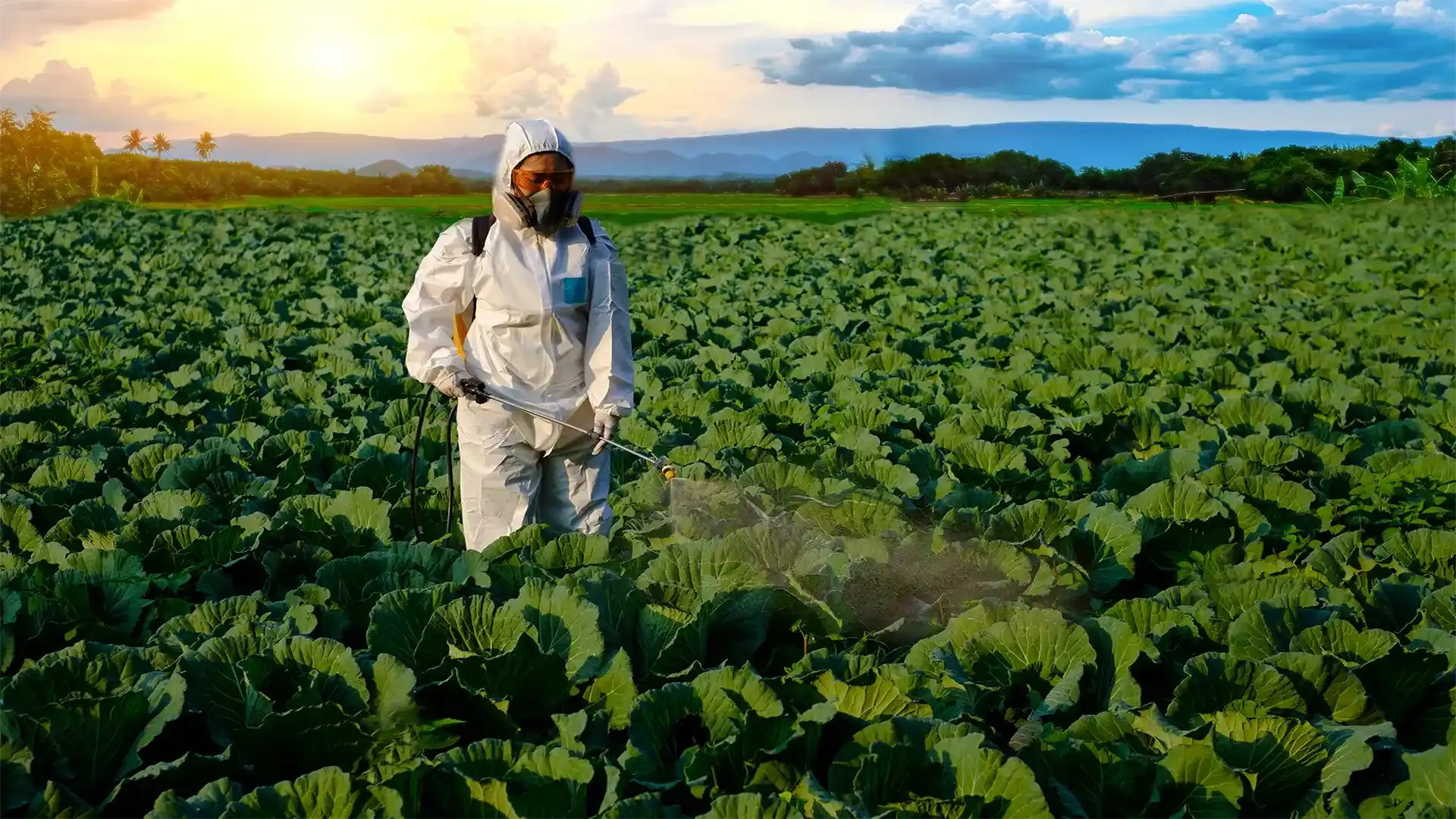
In Johnson v. Monsanto Company, Dewayne “Lee” Johnson alleged that workplace exposure to Monsanto’s Roundup Pro and Ranger Pro herbicides contributed to his non-Hodgkin’s lymphoma. Johnson began working for the Benicia Unified School District in California in 2012 and soon became its grounds integrated pest manager, a position that required him to apply glyphosate-based herbicides at school properties. He testified that spray sometimes reached exposed areas of his body during routine applications and described an April 2014 incident in which a broken hose released Ranger Pro inside his protective clothing and onto his skin. Johnson was diagnosed with non-Hodgkin’s lymphoma in October 2014 and sued Monsanto in San Francisco Superior Court in January 2016, pursuing design-defect and failure-to-warn claims.
The 2018 trial involved competing scientific and medical testimony on glyphosate, formulated Roundup products, epidemiology, toxicology, exposure, cancer causation, disease development, and product warnings. A San Francisco jury found Monsanto liable and awarded Johnson approximately $289.3 million, including $250 million in punitive damages. The trial court reduced the judgment to approximately $78.5 million, and the California Court of Appeal later reduced compensatory damages to $10,253,209.32 and punitive damages to the same amount. The California Supreme Court denied review on October 21, 2020.
Dewayne “Lee” Johnson began working for the Benicia Unified School District in June 2012, initially as a delivery driver, and soon became the district’s grounds integrated pest manager. His duties included applying herbicides to school perimeters, parking lots, hillsides, sports fields, and other district property. Johnson initially used Roundup Pro and later Ranger Pro, both glyphosate-based herbicides manufactured by Monsanto. He testified that spray sometimes reached his face, ears, cheeks, and neck even though he wore protective equipment during applications.
In April 2014, Johnson was spraying Ranger Pro at a school when a hose connected to his truck-mounted equipment became caught in a sidewalk gap and broke. Ranger Pro entered his protective clothing and reached his clothes, skin, face, neck, and head. Johnson cleaned himself at the school district’s maintenance yard after the incident. During the following months, he developed a skin condition that continued to spread despite treatment.
As his skin condition progressed, Johnson was referred to a dermatologist and diagnosed with non-Hodgkin’s lymphoma in October 2014. His disease was identified as mycosis fungoides, a type of cutaneous T-cell lymphoma. In November 2014, Johnson called a telephone number listed on a Roundup container and asked whether his condition could be related to his Ranger Pro exposure and whether Roundup products could cause cancer. He described the hose incident during the call but did not receive a later response addressing those questions.
In March 2015, the International Agency for Research on Cancer classified glyphosate as “probably carcinogenic to humans,” or Group 2A. IARC based the classification on limited evidence of cancer in humans, sufficient evidence in experimental animals, and strong evidence concerning genotoxicity. The IARC Monographs program evaluates cancer hazards, or whether an agent is capable of causing cancer under some exposure circumstances, rather than estimating the probability that a particular level of exposure will cause cancer. At Johnson’s later trial, witnesses discussed the IARC evaluation along with epidemiological research, animal studies, toxicology evidence, and regulatory assessments.
Johnson last used Roundup products in January 2016 and filed suit against Monsanto that same month in the Superior Court of the City and County of San Francisco, Case No. CGC-16-550128. His claims included strict-liability failure to warn, negligent failure to warn, and design defect. Johnson alleged that Roundup Pro and Ranger Pro lacked adequate warnings concerning potential cancer risks and that his exposure was a substantial factor in causing his non-Hodgkin’s lymphoma. Monsanto disputed causation and challenged Johnson’s interpretation of the scientific evidence.
Johnson’s trial began in June 2018. Both sides presented testimony concerning cancer-risk assessment, epidemiology, toxicology, herbicide exposure, product application, disease development, pesticide regulation, and Johnson’s medical history. Christopher Portier testified for Johnson in cancer-risk assessment; Alfred Neugut testified in medical oncology and cancer epidemiology; Chadi Nabhan addressed the diagnosis and treatment of non-Hodgkin’s lymphoma as well as general and Johnson-specific causation; William Sawyer testified in toxicology and forensic toxicology; and Charles Benbrook testified in pesticide regulation and pesticide risk assessment.
Monsanto presented Kassim Al-Khatib in weed science, herbicide drift, and the use and application of glyphosate-based herbicides. Lorelei Mucci testified in cancer epidemiology, Warren Foster addressed toxicology and the design and interpretation of long-term rodent carcinogenicity studies, and Timothy Kuzel testified in mycosis fungoides/cutaneous T-cell lymphoma, non-Hodgkin’s lymphoma, and oncology. Their testimony presented different interpretations of the scientific and regulatory evidence concerning glyphosate-based herbicides and lymphoma.
After three days of deliberations, the San Francisco jury found in Johnson’s favor on his failure-to-warn and design-defect theories. Jurors awarded approximately $39.3 million in compensatory damages and $250 million in punitive damages, producing a total verdict of approximately $289.3 million. The verdict included findings under strict-liability failure to warn, negligent failure to warn, and design defect. Monsanto filed post-trial motions challenging the liability findings and damages.
San Francisco Superior Court Judge Suzanne R. Bolanos declined to overturn the jury’s liability findings or order a new trial on causation. The court concluded that sufficient evidence supported the jury’s determination that Johnson’s exposure to glyphosate-based herbicides was a substantial factor in causing his non-Hodgkin’s lymphoma. The court reduced the $250 million punitive damages award to approximately $39.25 million, equal to the compensatory damages award for purposes of a 1:1 punitive-to-compensatory ratio. Johnson accepted the reduction, leaving a judgment of approximately $78.5 million.
The California Court of Appeal, First Appellate District, rejected most of Monsanto’s challenges to the judgment. The court concluded that substantial evidence supported the failure-to-warn findings and the jury’s causation determination. It also rejected Monsanto’s challenge to Johnson’s use of the consumer-expectations theory of design defect.
The court found that the evidence did not support the entire $33 million award for future noneconomic damages. It reduced future noneconomic damages to $4 million, resulting in total compensatory damages of $10,253,209.32. Punitive damages were reduced to the same amount, leaving combined compensatory and punitive damages of $20,506,418.64.
The Court of Appeal denied rehearing on August 18, 2020, and modified portions of its July opinion without changing the judgment. The reduced compensatory and punitive damages remained in place. Portions of the opinion were not certified for publication, including the court’s discussion of federal preemption.
The California Supreme Court denied review on October 21, 2020. The Court of Appeal’s judgment remained in effect, including its liability determinations and reduced damages. Johnson’s compensatory and punitive damages totaled $20,506,418.64 following appellate review.
In a separate Roundup lawsuit, Monsanto Co. v. Durnell, the U.S. Supreme Court addressed whether the Federal Insecticide, Fungicide, and Rodenticide Act preempts a state-law failure-to-warn claim based on the absence of a cancer warning from a Roundup label. The Court held that FIFRA preempted Durnell’s label-based state tort claim because it would require Monsanto to add a cancer warning when the federally approved label did not contain one and EPA had not required such a warning.
The Durnell decision involved a separate Missouri lawsuit and did not address or alter the judgment in Johnson’s California case. The ruling established the Supreme Court’s interpretation of FIFRA preemption for the label-based failure-to-warn claim presented in Durnell.
California Court of Appeal, First Appellate District
Case Name:
Johnson v. Monsanto Company
Chemical Exposures
Environmental Toxicology
Human Health Risk Assessment HHRA
Risk Assessment
Safety Warnings
Worker Safety
Work Related Injuries
Damages Calculations
In Johnson v. Monsanto Company, Dewayne “Lee” Johnson alleged that workplace exposure to Monsanto’s Roundup Pro and Ranger Pro herbicides contributed to his non-Hodgkin’s lymphoma. Johnson began working for the Benicia Unified School District in California in 2012 and soon became its grounds integrated pest manager, a position that required him to apply glyphosate-based herbicides at school properties. He testified that spray sometimes reached exposed areas of his body during routine applications and described an April 2014 incident in which a broken hose released Ranger Pro inside his protective clothing and onto his skin. Johnson was diagnosed with non-Hodgkin’s lymphoma in October 2014 and sued Monsanto in San Francisco Superior Court in January 2016, pursuing design-defect and failure-to-warn claims.
The 2018 trial involved competing scientific and medical testimony on glyphosate, formulated Roundup products, epidemiology, toxicology, exposure, cancer causation, disease development, and product warnings. A San Francisco jury found Monsanto liable and awarded Johnson approximately $289.3 million, including $250 million in punitive damages. The trial court reduced the judgment to approximately $78.5 million, and the California Court of Appeal later reduced compensatory damages to $10,253,209.32 and punitive damages to the same amount. The California Supreme Court denied review on October 21, 2020.
Dewayne “Lee” Johnson began working for the Benicia Unified School District in June 2012, initially as a delivery driver, and soon became the district’s grounds integrated pest manager. His duties included applying herbicides to school perimeters, parking lots, hillsides, sports fields, and other district property. Johnson initially used Roundup Pro and later Ranger Pro, both glyphosate-based herbicides manufactured by Monsanto. He testified that spray sometimes reached his face, ears, cheeks, and neck even though he wore protective equipment during applications.
In April 2014, Johnson was spraying Ranger Pro at a school when a hose connected to his truck-mounted equipment became caught in a sidewalk gap and broke. Ranger Pro entered his protective clothing and reached his clothes, skin, face, neck, and head. Johnson cleaned himself at the school district’s maintenance yard after the incident. During the following months, he developed a skin condition that continued to spread despite treatment.
As his skin condition progressed, Johnson was referred to a dermatologist and diagnosed with non-Hodgkin’s lymphoma in October 2014. His disease was identified as mycosis fungoides, a type of cutaneous T-cell lymphoma. In November 2014, Johnson called a telephone number listed on a Roundup container and asked whether his condition could be related to his Ranger Pro exposure and whether Roundup products could cause cancer. He described the hose incident during the call but did not receive a later response addressing those questions.
In March 2015, the International Agency for Research on Cancer classified glyphosate as “probably carcinogenic to humans,” or Group 2A. IARC based the classification on limited evidence of cancer in humans, sufficient evidence in experimental animals, and strong evidence concerning genotoxicity. The IARC Monographs program evaluates cancer hazards, or whether an agent is capable of causing cancer under some exposure circumstances, rather than estimating the probability that a particular level of exposure will cause cancer. At Johnson’s later trial, witnesses discussed the IARC evaluation along with epidemiological research, animal studies, toxicology evidence, and regulatory assessments.
Johnson last used Roundup products in January 2016 and filed suit against Monsanto that same month in the Superior Court of the City and County of San Francisco, Case No. CGC-16-550128. His claims included strict-liability failure to warn, negligent failure to warn, and design defect. Johnson alleged that Roundup Pro and Ranger Pro lacked adequate warnings concerning potential cancer risks and that his exposure was a substantial factor in causing his non-Hodgkin’s lymphoma. Monsanto disputed causation and challenged Johnson’s interpretation of the scientific evidence.
Johnson’s trial began in June 2018. Both sides presented testimony concerning cancer-risk assessment, epidemiology, toxicology, herbicide exposure, product application, disease development, pesticide regulation, and Johnson’s medical history. Christopher Portier testified for Johnson in cancer-risk assessment; Alfred Neugut testified in medical oncology and cancer epidemiology; Chadi Nabhan addressed the diagnosis and treatment of non-Hodgkin’s lymphoma as well as general and Johnson-specific causation; William Sawyer testified in toxicology and forensic toxicology; and Charles Benbrook testified in pesticide regulation and pesticide risk assessment.
Monsanto presented Kassim Al-Khatib in weed science, herbicide drift, and the use and application of glyphosate-based herbicides. Lorelei Mucci testified in cancer epidemiology, Warren Foster addressed toxicology and the design and interpretation of long-term rodent carcinogenicity studies, and Timothy Kuzel testified in mycosis fungoides/cutaneous T-cell lymphoma, non-Hodgkin’s lymphoma, and oncology. Their testimony presented different interpretations of the scientific and regulatory evidence concerning glyphosate-based herbicides and lymphoma.
After three days of deliberations, the San Francisco jury found in Johnson’s favor on his failure-to-warn and design-defect theories. Jurors awarded approximately $39.3 million in compensatory damages and $250 million in punitive damages, producing a total verdict of approximately $289.3 million. The verdict included findings under strict-liability failure to warn, negligent failure to warn, and design defect. Monsanto filed post-trial motions challenging the liability findings and damages.
San Francisco Superior Court Judge Suzanne R. Bolanos declined to overturn the jury’s liability findings or order a new trial on causation. The court concluded that sufficient evidence supported the jury’s determination that Johnson’s exposure to glyphosate-based herbicides was a substantial factor in causing his non-Hodgkin’s lymphoma. The court reduced the $250 million punitive damages award to approximately $39.25 million, equal to the compensatory damages award for purposes of a 1:1 punitive-to-compensatory ratio. Johnson accepted the reduction, leaving a judgment of approximately $78.5 million.
The California Court of Appeal, First Appellate District, rejected most of Monsanto’s challenges to the judgment. The court concluded that substantial evidence supported the failure-to-warn findings and the jury’s causation determination. It also rejected Monsanto’s challenge to Johnson’s use of the consumer-expectations theory of design defect.
The court found that the evidence did not support the entire $33 million award for future noneconomic damages. It reduced future noneconomic damages to $4 million, resulting in total compensatory damages of $10,253,209.32. Punitive damages were reduced to the same amount, leaving combined compensatory and punitive damages of $20,506,418.64.
The Court of Appeal denied rehearing on August 18, 2020, and modified portions of its July opinion without changing the judgment. The reduced compensatory and punitive damages remained in place. Portions of the opinion were not certified for publication, including the court’s discussion of federal preemption.
The California Supreme Court denied review on October 21, 2020. The Court of Appeal’s judgment remained in effect, including its liability determinations and reduced damages. Johnson’s compensatory and punitive damages totaled $20,506,418.64 following appellate review.
In a separate Roundup lawsuit, Monsanto Co. v. Durnell, the U.S. Supreme Court addressed whether the Federal Insecticide, Fungicide, and Rodenticide Act preempts a state-law failure-to-warn claim based on the absence of a cancer warning from a Roundup label. The Court held that FIFRA preempted Durnell’s label-based state tort claim because it would require Monsanto to add a cancer warning when the federally approved label did not contain one and EPA had not required such a warning.
The Durnell decision involved a separate Missouri lawsuit and did not address or alter the judgment in Johnson’s California case. The ruling established the Supreme Court’s interpretation of FIFRA preemption for the label-based failure-to-warn claim presented in Durnell.
Toxicology and Cancer Risk Assessment Expert Witnesses
Plaintiff: Christopher Portier testified for Johnson as an expert in cancer-risk assessment.
Plaintiff: William Sawyer testified as an expert in toxicology and forensic toxicology and offered opinions concerning glyphosate, Roundup products, exposure, and causation.
Defense: Warren Foster testified for Monsanto as an expert in toxicology and the design, evaluation, and interpretation of long-term rodent carcinogenicity studies.
Cancer Epidemiology Expert Witnesses
Plaintiff: Alfred Neugut testified for Johnson as an expert in medical oncology and cancer epidemiology. He reviewed epidemiological studies addressing an association between glyphosate exposure and non-Hodgkin’s lymphoma and offered an opinion on general causation.
Defense: Lorelei Mucci testified for Monsanto as an expert in cancer epidemiology and discussed research concerning glyphosate exposure and non-Hodgkin’s lymphoma.
Hematology and Oncology Expert Witnesses
Plaintiff: Chadi Nabhan testified for Johnson as an expert in the diagnosis and treatment of non-Hodgkin’s lymphoma. He addressed whether glyphosate could cause non-Hodgkin’s lymphoma generally and whether Roundup products contributed to Johnson’s disease specifically.
Defense: Timothy Kuzel testified for Monsanto as an expert in mycosis fungoides/cutaneous T-cell lymphoma, non-Hodgkin’s lymphoma, and oncology. His testimony also addressed the timing of Johnson’s symptoms in relation to the disputed disease-development timeline.
Pesticide Regulation and Risk Assessment Expert Witness
Plaintiff: Charles Benbrook testified for Johnson as an expert in pesticide regulation and pesticide risk assessment. His testimony addressed EPA pesticide-review procedures and differences between an IARC hazard evaluation and an EPA risk assessment.
Herbicide Application and Spray Drift Expert Witness
Defense: Kassim Al-Khatib testified for Monsanto as an expert in weed science, herbicide drift, and the use and application of glyphosate-based herbicides. He addressed Johnson’s herbicide-application practices and opined that, because Johnson sprayed correctly, the drift he experienced would have been insignificant.
Chemical Exposure Expert Witness
A chemical exposure expert witness may evaluate how a person came into contact with a chemical product, the likely route and duration of exposure, and the concentration or dose involved. In litigation involving herbicides such as Roundup Pro and Ranger Pro, this type of expert may assess workplace application practices, dermal contact, inhalation, protective equipment, spray drift, and exposure scenarios relevant to toxicology and causation.
Roundup Pro and Ranger Pro Were the Products Involved in Johnson’s Claims
Johnson used Roundup Pro and Ranger Pro while maintaining grounds for the Benicia Unified School District. Both were glyphosate-based commercial herbicide formulations manufactured by Monsanto. At trial, the scientific evidence addressed glyphosate as an active ingredient as well as formulated Roundup products containing other components, and witnesses disagreed over how studies involving glyphosate alone and formulated herbicides should be interpreted when evaluating toxicity and cancer causation.
Johnson’s Exposure History Included Routine Spray Contact and the April 2014 Hose Incident
Johnson testified that spray reached exposed areas of his body during some routine herbicide applications and that he used Roundup products repeatedly over several years. His exposure history also included the April 2014 Ranger Pro hose incident, when herbicide entered his protective clothing and contacted several areas of his body. Testimony on exposure considered application practices, spray drift, protective equipment, frequency of use, and the hose incident together with Johnson’s medical history.
General and Specific Cancer Causation Were Addressed Separately at Trial
The scientific testimony distinguished between general causation, which addressed whether glyphosate or Roundup products could cause non-Hodgkin’s lymphoma, and specific causation, which addressed whether Johnson’s own exposure contributed to his disease. Chadi Nabhan opined that Roundup products were a substantial contributing factor in Johnson’s lymphoma, and William Sawyer also offered Johnson-specific causation testimony, while Monsanto’s witnesses disputed the asserted causal relationship. The California Court of Appeal later concluded that substantial evidence supported the jury’s causation finding.
IARC and EPA Evaluated Glyphosate Under Different Scientific and Regulatory Frameworks
IARC classified glyphosate as probably carcinogenic to humans in 2015 through its cancer-hazard identification program, which assesses whether an agent is capable of causing cancer under some exposure circumstances rather than estimating the probability that a particular exposure will cause cancer. At the time of Johnson’s 2018 trial, EPA had not reached a final registration-review determination and was proposing to classify glyphosate as not likely to be carcinogenic to humans. EPA later issued a 2020 interim registration-review decision, the human-health portion was vacated in subsequent litigation, and EPA withdrew the remaining portions while continuing its registration review; EPA still states its longstanding scientific finding that glyphosate is not likely to be carcinogenic to humans while reconsidering its human-health analysis.
Johnson’s $289.3 Million Roundup Verdict Was Reduced During Post-Trial and Appellate Review
The jury initially awarded Johnson approximately $39.3 million in compensatory damages and $250 million in punitive damages, for a total verdict of approximately $289.3 million. The trial court reduced punitive damages to approximately $39.25 million, leaving a judgment of about $78.5 million, and the California Court of Appeal later reduced compensatory damages to $10,253,209.32 and punitive damages to the same amount. The resulting combined compensatory and punitive damages totaled $20,506,418.64.
The August 2018 jury verdict in Johnson v. Monsanto was followed by two reductions in damages while the liability findings remained intact. The trial court reduced punitive damages from $250 million to approximately $39.25 million, and the California Court of Appeal later reduced compensatory damages to $10,253,209.32 and punitive damages to the same amount; the California Supreme Court denied review in October 2020. In June 2026, the U.S. Supreme Court separately addressed Roundup labeling in Monsanto v. Durnell and held that FIFRA preempted the label-based failure-to-warn claim presented in that case, but the decision did not address or alter Johnson’s final California judgment.

What happened during Dewayne Johnson’s Ranger Pro exposure in April 2014?
A hose attached to Johnson’s spraying equipment became caught in a sidewalk gap and broke while he was applying Ranger Pro at a school. The herbicide entered his protective clothing and reached his clothes, skin, face, neck, and head.
What type of cancer was Dewayne Johnson diagnosed with?
Johnson was diagnosed with non-Hodgkin’s lymphoma in October 2014. His disease was identified as mycosis fungoides, a type of cutaneous T-cell lymphoma.
What claims did Dewayne Johnson bring against Monsanto?
Johnson pursued strict-liability failure-to-warn, negligent failure-to-warn, and design-defect claims. He alleged that Roundup Pro and Ranger Pro lacked adequate warnings concerning potential cancer risks and that exposure to the products was a substantial factor in causing his lymphoma.
How much did the jury award Johnson in the Roundup lawsuit?
The jury awarded approximately $39.3 million in compensatory damages and $250 million in punitive damages in August 2018. The compensatory and punitive awards were later reduced through post-trial and appellate proceedings.
What was the final California appellate result in Johnson v. Monsanto?
The California Court of Appeal left the liability findings in place but reduced compensatory damages to $10,253,209.32 and punitive damages to the same amount. The California Supreme Court denied review on October 21, 2020, leaving those reduced damages and the appellate judgment in place.
Toxicology and Cancer Risk Assessment Expert Witnesses
Plaintiff: Christopher Portier testified for Johnson as an expert in cancer-risk assessment.
Plaintiff: William Sawyer testified as an expert in toxicology and forensic toxicology and offered opinions concerning glyphosate, Roundup products, exposure, and causation.
Defense: Warren Foster testified for Monsanto as an expert in toxicology and the design, evaluation, and interpretation of long-term rodent carcinogenicity studies.
Cancer Epidemiology Expert Witnesses
Plaintiff: Alfred Neugut testified for Johnson as an expert in medical oncology and cancer epidemiology. He reviewed epidemiological studies addressing an association between glyphosate exposure and non-Hodgkin’s lymphoma and offered an opinion on general causation.
Defense: Lorelei Mucci testified for Monsanto as an expert in cancer epidemiology and discussed research concerning glyphosate exposure and non-Hodgkin’s lymphoma.
Hematology and Oncology Expert Witnesses
Plaintiff: Chadi Nabhan testified for Johnson as an expert in the diagnosis and treatment of non-Hodgkin’s lymphoma. He addressed whether glyphosate could cause non-Hodgkin’s lymphoma generally and whether Roundup products contributed to Johnson’s disease specifically.
Defense: Timothy Kuzel testified for Monsanto as an expert in mycosis fungoides/cutaneous T-cell lymphoma, non-Hodgkin’s lymphoma, and oncology. His testimony also addressed the timing of Johnson’s symptoms in relation to the disputed disease-development timeline.
Pesticide Regulation and Risk Assessment Expert Witness
Plaintiff: Charles Benbrook testified for Johnson as an expert in pesticide regulation and pesticide risk assessment. His testimony addressed EPA pesticide-review procedures and differences between an IARC hazard evaluation and an EPA risk assessment.
Herbicide Application and Spray Drift Expert Witness
Defense: Kassim Al-Khatib testified for Monsanto as an expert in weed science, herbicide drift, and the use and application of glyphosate-based herbicides. He addressed Johnson’s herbicide-application practices and opined that, because Johnson sprayed correctly, the drift he experienced would have been insignificant.
Chemical Exposure Expert Witness
A chemical exposure expert witness may evaluate how a person came into contact with a chemical product, the likely route and duration of exposure, and the concentration or dose involved. In litigation involving herbicides such as Roundup Pro and Ranger Pro, this type of expert may assess workplace application practices, dermal contact, inhalation, protective equipment, spray drift, and exposure scenarios relevant to toxicology and causation.
Roundup Pro and Ranger Pro Were the Products Involved in Johnson’s Claims
Johnson used Roundup Pro and Ranger Pro while maintaining grounds for the Benicia Unified School District. Both were glyphosate-based commercial herbicide formulations manufactured by Monsanto. At trial, the scientific evidence addressed glyphosate as an active ingredient as well as formulated Roundup products containing other components, and witnesses disagreed over how studies involving glyphosate alone and formulated herbicides should be interpreted when evaluating toxicity and cancer causation.
Johnson’s Exposure History Included Routine Spray Contact and the April 2014 Hose Incident
Johnson testified that spray reached exposed areas of his body during some routine herbicide applications and that he used Roundup products repeatedly over several years. His exposure history also included the April 2014 Ranger Pro hose incident, when herbicide entered his protective clothing and contacted several areas of his body. Testimony on exposure considered application practices, spray drift, protective equipment, frequency of use, and the hose incident together with Johnson’s medical history.
General and Specific Cancer Causation Were Addressed Separately at Trial
The scientific testimony distinguished between general causation, which addressed whether glyphosate or Roundup products could cause non-Hodgkin’s lymphoma, and specific causation, which addressed whether Johnson’s own exposure contributed to his disease. Chadi Nabhan opined that Roundup products were a substantial contributing factor in Johnson’s lymphoma, and William Sawyer also offered Johnson-specific causation testimony, while Monsanto’s witnesses disputed the asserted causal relationship. The California Court of Appeal later concluded that substantial evidence supported the jury’s causation finding.
IARC and EPA Evaluated Glyphosate Under Different Scientific and Regulatory Frameworks
IARC classified glyphosate as probably carcinogenic to humans in 2015 through its cancer-hazard identification program, which assesses whether an agent is capable of causing cancer under some exposure circumstances rather than estimating the probability that a particular exposure will cause cancer. At the time of Johnson’s 2018 trial, EPA had not reached a final registration-review determination and was proposing to classify glyphosate as not likely to be carcinogenic to humans. EPA later issued a 2020 interim registration-review decision, the human-health portion was vacated in subsequent litigation, and EPA withdrew the remaining portions while continuing its registration review; EPA still states its longstanding scientific finding that glyphosate is not likely to be carcinogenic to humans while reconsidering its human-health analysis.
Johnson’s $289.3 Million Roundup Verdict Was Reduced During Post-Trial and Appellate Review
The jury initially awarded Johnson approximately $39.3 million in compensatory damages and $250 million in punitive damages, for a total verdict of approximately $289.3 million. The trial court reduced punitive damages to approximately $39.25 million, leaving a judgment of about $78.5 million, and the California Court of Appeal later reduced compensatory damages to $10,253,209.32 and punitive damages to the same amount. The resulting combined compensatory and punitive damages totaled $20,506,418.64.
The August 2018 jury verdict in Johnson v. Monsanto was followed by two reductions in damages while the liability findings remained intact. The trial court reduced punitive damages from $250 million to approximately $39.25 million, and the California Court of Appeal later reduced compensatory damages to $10,253,209.32 and punitive damages to the same amount; the California Supreme Court denied review in October 2020. In June 2026, the U.S. Supreme Court separately addressed Roundup labeling in Monsanto v. Durnell and held that FIFRA preempted the label-based failure-to-warn claim presented in that case, but the decision did not address or alter Johnson’s final California judgment.
What happened during Dewayne Johnson’s Ranger Pro exposure in April 2014?
A hose attached to Johnson’s spraying equipment became caught in a sidewalk gap and broke while he was applying Ranger Pro at a school. The herbicide entered his protective clothing and reached his clothes, skin, face, neck, and head.
What type of cancer was Dewayne Johnson diagnosed with?
Johnson was diagnosed with non-Hodgkin’s lymphoma in October 2014. His disease was identified as mycosis fungoides, a type of cutaneous T-cell lymphoma.
What claims did Dewayne Johnson bring against Monsanto?
Johnson pursued strict-liability failure-to-warn, negligent failure-to-warn, and design-defect claims. He alleged that Roundup Pro and Ranger Pro lacked adequate warnings concerning potential cancer risks and that exposure to the products was a substantial factor in causing his lymphoma.
How much did the jury award Johnson in the Roundup lawsuit?
The jury awarded approximately $39.3 million in compensatory damages and $250 million in punitive damages in August 2018. The compensatory and punitive awards were later reduced through post-trial and appellate proceedings.
What was the final California appellate result in Johnson v. Monsanto?
The California Court of Appeal left the liability findings in place but reduced compensatory damages to $10,253,209.32 and punitive damages to the same amount. The California Supreme Court denied review on October 21, 2020, leaving those reduced damages and the appellate judgment in place.
Agriculture, +4
Agriculture
Agriculture, +4
Agriculture