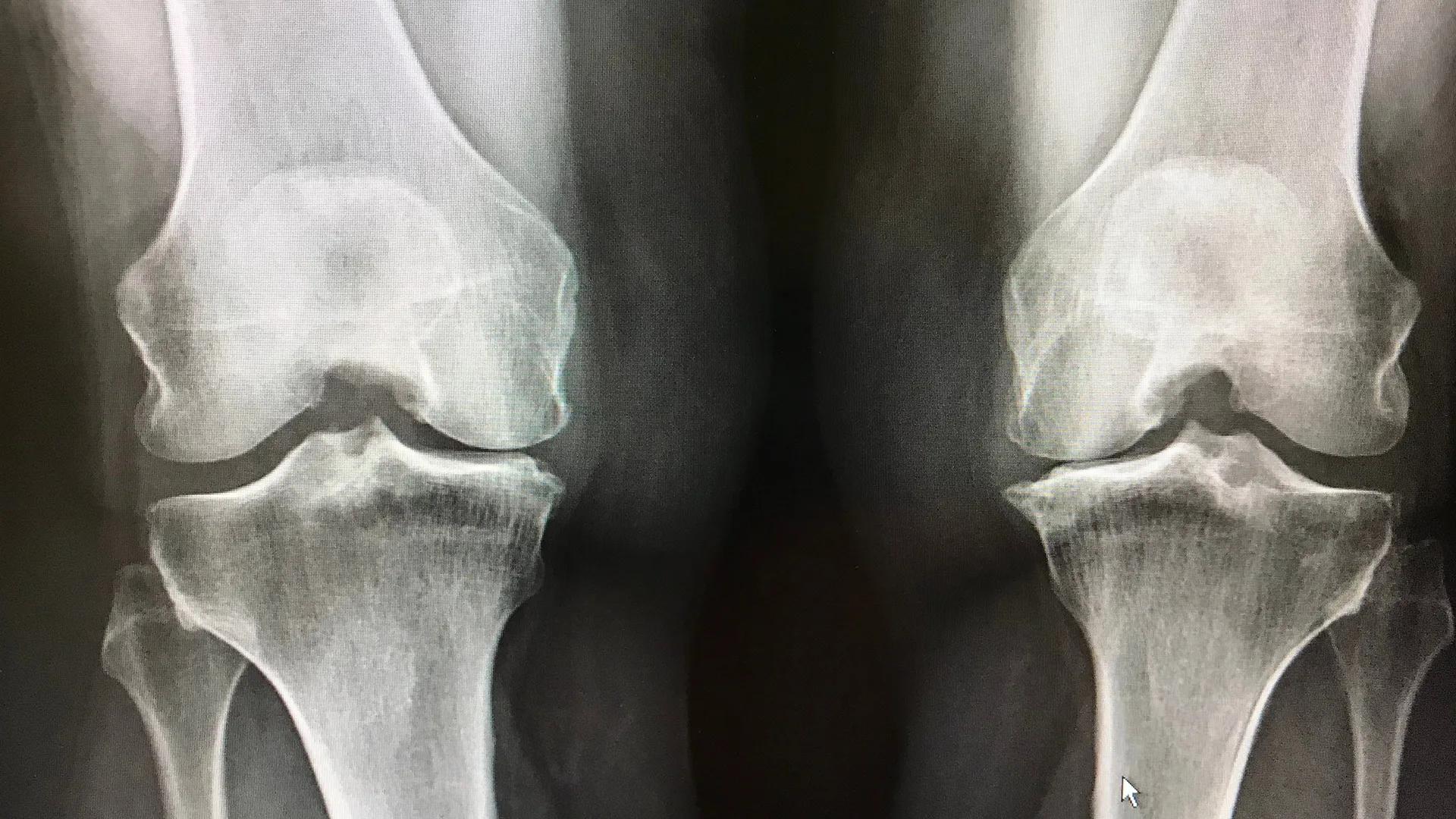
Knee Implant Delamination and Zimmer's Sterilization Dispute
Nearly ten years after receiving an artificial right knee, Arthur W. Fuesting underwent surgery to replace the implant after developing persistent pain and swelling. During the procedure in November 2001, his orthopedic surgeon discovered loose polyethylene fragments around the joint. The implant, manufactured by Zimmer, Inc., contained a plastic bearing surface that had deteriorated during use. Fuesting subsequently sued Zimmer in October 2002, alleging that the company's gamma irradiation sterilization process had caused the polyethylene to oxidize, weaken, and separate into layers. Zimmer disputed the proposed cause, pointing to mechanical wear and other conditions that could have contributed to the damage. The lawsuit proceeded through a jury trial, multiple appeals, and further examination of the removed implant. Although Fuesting initially received a $650,000 jury award, the courts later excluded key scientific testimony concerning the alleged defect. The litigation ended in January 2010 when the Seventh Circuit affirmed summary judgment for Zimmer.
Fuesting v. Zimmer Timeline: Polyethylene Failure and Appeals
February 5, 1992: Zimmer Knee Implant Is Placed
Arthur W. Fuesting received a right total knee replacement performed by orthopedic surgeon Dr. James McKechnie. The procedure used Zimmer's I/B Knee system, which included a metal tibial component fitted with an ultra-high-molecular-weight polyethylene (UHMWPE) bearing surface. Manufactured in 1991, the implant had undergone gamma irradiation in air, a sterilization process commonly used for orthopedic devices at that time. Approximately seven months passed between the component's manufacture and implantation, and Fuesting initially recovered sufficiently to return to his usual activities.
November 14, 2001: Polyethylene Fragments Found During Surgery
In May 2001, Fuesting began experiencing renewed pain and swelling in his right knee after years of satisfactory implant function. Medical imaging did not indicate that the prosthesis had loosened, but his symptoms persisted and eventually required further surgery. On November 14, Dr. McKechnie removed the Zimmer implant and observed fragments of polyethylene within the surrounding joint area. He replaced the original device with a Johnson & Johnson knee implant, while the removed component was retained for examination. The damaged plastic became the subject of competing explanations concerning oxidation, mechanical stress, and deterioration during the implant's service life.
October 2002: Fuesting Files Product-Liability Claims Against Zimmer
Fuesting brought a lawsuit against Zimmer in the United States District Court for the Central District of Illinois, asserting strict liability and negligence claims involving the implant's design. He alleged that the manufacturer's decision to sterilize polyethylene through gamma irradiation in air contributed to premature material degradation. According to his claims, the process generated chemical conditions that encouraged oxidation, weakened the bearing surface, and eventually caused delamination. Zimmer denied that the chosen sterilization method was responsible for the failure and challenged the proposed relationship between oxidation and the observed damage. The parties also disputed whether alternative sterilization methods were suitable and available when the component was manufactured in 1991.
April 2, 2004: Jury Awards Fuesting $650,000 in Damages
Before the trial began, Fuesting underwent another right knee replacement in April 2003 after reporting grinding and crunching with the device implanted during his 2001 revision. During the 2004 trial, plaintiff witness Dr. James Pugh attributed the original Zimmer component's deterioration to oxidation associated with gamma irradiation in air. Dr. McKechnie also testified concerning Fuesting's treatment and supported the plaintiff's explanation of the implant failure. Zimmer presented opposing testimony from Dr. William Maloney and Dr. Albert Burstein, who addressed mechanical wear, implant performance, and alternative explanations for the damage. After nearly five days of testimony, the jury returned a verdict for Fuesting on April 2, 2004, awarding him $650,000.
August 30, 2005: Seventh Circuit Reverses the Jury Verdict
Zimmer appealed, arguing that Pugh's opinions should not have been admitted under Federal Rule of Evidence 702 and the Daubert standard governing scientific testimony. The Seventh Circuit examined his explanation that gamma irradiation produced free radicals, which reacted with oxygen and contributed to polyethylene degradation. Although the underlying chemical process was recognized, the court found that Pugh had not reliably established that it caused the failure of Fuesting's specific implant. His conclusions lacked adequate testing, supporting research, and analysis of competing causes such as mechanical wear. The appellate court reversed the jury verdict and initially instructed the district court to enter judgment for Zimmer.
May 22, 2006: Seventh Circuit Orders a New Trial
Following the reversal, Fuesting sought rehearing, challenging the appellate court's direction to enter judgment for Zimmer. An intervening Supreme Court decision, Unitherm Food Systems, Inc. v. Swift-Eckrich, Inc., addressed the limits of appellate review when a party had not filed the necessary post-verdict motion concerning the sufficiency of the evidence. The Seventh Circuit reconsidered the procedural remedy because Zimmer had not renewed its motion for judgment as a matter of law after the jury returned its verdict. While the court maintained that Pugh's testimony had been improperly admitted, it withdrew the instruction to enter judgment for Zimmer. Instead, the case returned to the district court for a new trial, allowing further proceedings under the applicable procedural rules.
January 26, 2009: District Court Excludes Additional Expert Testimony
After the remand, Fuesting retained Dr. Robert M. Rose to examine the removed polyethylene component and investigate whether oxidation had contributed to its deterioration. Rose identified a white band within the material that he associated with oxidative degradation, but the court questioned whether his analysis could distinguish damage occurring during implantation from changes developing afterward. The component had undergone steam sterilization following removal and remained in an air environment for approximately six years before Rose examined it. The district court found that his conclusions did not adequately account for these conditions, establish a reliable connection between oxidation and failure, or demonstrate that an alternative sterilization method was appropriate in 1991. It excluded Rose's proposed testimony and restricted Dr. McKechnie's causation and damages opinions because they relied on Rose's analysis. Without sufficient admissible evidence to establish the alleged defect and its connection to the failure, the court granted summary judgment for Zimmer and terminated the case.
January 25, 2010: Seventh Circuit Affirms Judgment for Zimmer
Fuesting appealed the district court's exclusion of the additional testimony and its decision to grant summary judgment. The Seventh Circuit reviewed Rose's examination of the polyethylene component, including his conclusions about oxidation during implantation and his treatment of possible deterioration after removal. The court agreed that the methods used did not adequately distinguish the competing causes or reliably connect Zimmer's sterilization process to the implant's failure. It also upheld the restrictions on McKechnie's proposed causation testimony and rejected Fuesting's challenge concerning alleged discovery violations. With the disputed opinions excluded, the appellate court affirmed summary judgment for Zimmer, bringing the litigation to a close.
Expert Assessment of Polyethylene Degradation and Implant Failure
James Pugh: Biomedical Engineering and Polymer Failure Expert Witness (Plaintiff)
James Pugh testified for Fuesting about polyethylene oxidation and the alleged effects of gamma irradiation during sterilization. He maintained that Zimmer's sterilization process weakened the implant's plastic bearing surface, causing premature delamination. Pugh also proposed ethylene oxide sterilization and gamma irradiation in an inert environment as alternatives. Although his testimony was admitted at trial, the Seventh Circuit found that his methods lacked sufficient scientific testing and support connecting oxidation to the failure of Fuesting's specific implant. The court also questioned his assessment of alternative sterilization methods and found that he had not adequately addressed competing causes of deterioration. His testimony was ruled inadmissible, contributing to the reversal of the original jury verdict.
Dr. Robert Rose: Polymer Oxidation Expert Witness (Plaintiff)
Dr. Robert Rose was retained after the first appeal to investigate whether polyethylene oxidation contributed to the implant's deterioration. He examined the removed component and identified a white band that he associated with oxidative degradation, concluding that substantial oxidation occurred during implantation. However, the district court found that his analysis did not adequately account for the implant's post-removal steam sterilization and approximately six years of storage in air. Rose also failed to establish a reliable connection between the observed oxidation and the component's failure. His proposed testimony was excluded before a second trial, and the Seventh Circuit upheld that decision in January 2010.
Dr. James McKechnie: Orthopedic Surgery Expert Witness (Plaintiff)
Dr. James McKechnie, Fuesting's treating orthopedic surgeon, performed the original knee replacement in February 1992 and the revision surgery in November 2001. During the revision, he discovered polyethylene fragments surrounding the damaged implant and documented the condition of the joint. At the original trial, McKechnie supported the plaintiff's theory that sterilization-related oxidation caused the implant to fail. However, his causation opinions lacked independent scientific support and later relied on Dr. Rose's excluded analysis. The district court consequently restricted his proposed expert testimony concerning causation and damages while allowing him to testify about his medical treatment and surgical observations.
Dr. William Maloney: Orthopedic Surgery and Implant Wear Expert Witness (Defense)
Dr. William Maloney, an orthopedic surgeon and joint-replacement researcher, testified for Zimmer about mechanical wear and the deterioration of the polyethylene bearing surface. He disputed the plaintiff's claim that oxidation caused by gamma irradiation was responsible for the delamination. Instead, Maloney attributed the damage primarily to physical abrasion and loading during use. He identified Fuesting's gait, bone growth, and weight gain as possible contributing factors that increased stress on the implant. His testimony presented an alternative explanation for the material failure, challenging the alleged connection between Zimmer's sterilization method and the observed polyethylene deterioration.
Dr. Albert Burstein: Orthopedic Implant Design Expert Witness (Defense)
Dr. Albert Burstein, a co-inventor of Zimmer's I/B Knee system, testified for the manufacturer concerning implant design, mechanical wear, and polyethylene deterioration. He disputed the plaintiff's theory that gamma irradiation during sterilization caused the failure and instead attributed the damage to wear experienced during use. Burstein also questioned the proposed alternative sterilization process, citing potential concerns about implant performance. The district court excluded his separate proposed testimony concerning orthopedic industry sterilization practices in 1991 because of disclosure deficiencies. His admitted testimony addressed the implant's design, wear characteristics, and alternative explanations for the component's deterioration.
Five Findings From the Polyethylene Implant Failure Case
Polymer Oxidation and Product Defects Are Separate Questions
Gamma irradiation can create free radicals within polyethylene, which may react with oxygen and alter the material's chemical structure over time. These reactions can contribute to changes in strength, wear resistance, and surface condition. In Fuesting v. Zimmer, the general relationship between irradiation and oxidation was not the central disagreement. The parties disputed whether that process caused the deterioration of Fuesting's specific implant and whether Zimmer's sterilization decision made the product defective.
The Seventh Circuit required more than an explanation of how polyethylene oxidation occurs. The proposed testimony had to connect the material's chemical changes to the observed delamination and address the conditions under which the implant operated. Pugh's analysis did not adequately establish that connection, leading the court to exclude his opinions.
Polyethylene Delamination Can Have Competing Causes
The fragments discovered during Fuesting's revision surgery established that the polyethylene bearing surface had deteriorated. However, the physical condition of the material did not establish a single explanation for the damage. Zimmer's defense identified mechanical abrasion, repeated loading, gait characteristics, bone growth, and increased body weight as possible contributors.
The dispute involved the relationship between these mechanical conditions and the plaintiff's proposed chemical degradation mechanism. Repeated contact and loading can damage polymer surfaces, while oxidation can change a material's resistance to wear. The court found that the plaintiff's causation testimony had not adequately addressed the alternative explanations when attributing the failure to sterilization-induced oxidation.
Post-Removal Storage Can Affect Polymer Testing
The polyethylene component experienced several different environments during its history. It remained in storage for approximately seven months before implantation, spent nearly ten years inside Fuesting's knee, and was kept outside the body for approximately six years before Rose examined it. The removed device also underwent steam sterilization.
These conditions complicated the effort to determine when oxidation occurred. The white band Rose observed did not, by itself, establish how much degradation developed during implantation rather than after removal. The district court found that his analysis lacked a reliable method for distinguishing those periods. Without an adequate explanation of the component's condition over time, the observed oxidation could not reliably be attributed to Zimmer's manufacturing process.
Sterilization Alternatives Must Be Judged by Their Availability
The lawsuit concerned an implant manufactured in 1991, when gamma irradiation in air was a commonly used sterilization process for orthopedic devices. Fuesting argued that Zimmer should have selected a method that reduced the risk of polyethylene oxidation. Pugh proposed ethylene oxide sterilization and gamma irradiation in an inert environment as alternatives.
The appellate court examined whether the proposed methods were suitable and supported by the scientific knowledge available when the product was manufactured. The plaintiff's testimony did not adequately demonstrate that those alternatives offered a safer, practical design choice at that time. The court therefore rejected the unsupported conclusion that Zimmer's use of gamma irradiation in air established a defective design.
Scientific Causation Requires Evidence From the Failed Product
Both rounds of appellate litigation addressed the reliability of scientific opinions concerning a particular implant. Pugh presented a theory explaining how irradiation could contribute to polyethylene oxidation but did not sufficiently connect that theory to the observed failure. Rose later examined the component directly, yet his conclusions did not adequately address the effects of storage, handling, or competing causes of deterioration.
Federal Rule of Evidence 702 and the Daubert standard required the proposed opinions to rest on reliable methods applied to the facts of the case. The courts determined that the testimony did not meet those requirements. Once the disputed opinions were excluded, Fuesting lacked sufficient admissible causation evidence to sustain his product-liability claims, resulting in summary judgment for Zimmer.
Conclusion
Fuesting's lawsuit ended after a series of rulings that changed the outcome of his original jury victory. The Seventh Circuit first reversed the $650,000 verdict in 2005, then ordered a new trial in 2006 after reconsidering the proper procedural remedy. Back in district court, Fuesting presented additional scientific opinions based on an examination of the removed polyethylene component. The court found that the proposed analysis did not reliably establish when oxidation occurred or whether Zimmer's sterilization process caused the implant's deterioration. It excluded the disputed testimony, restricted related causation opinions, and granted summary judgment for the manufacturer in January 2009. On January 25, 2010, the Seventh Circuit affirmed that judgment. Zimmer prevailed on the claims considered in the appeal, and the original damages award did not stand.