South Dakota Supreme Court Rulings on Highway Drainage Flooding, Property Damage, and Fee Recovery
This case study examines two companion South Dakota Supreme Court decisions arising from the July 2010 Highway 11 flooding: Long v. State (No. 27368), addressing inverse condemnation liability and damages, and Long v. State (No. 27381), addressing the landowners’ post-judgment request for attorney fees and litigation expenses. Mark and Marilyn Long, Arnie and Shirley Van Voorst, Tim and Sara Doyle, Timothy and Jane Griffith, and Michael and Karen Taylor sued the State of South Dakota (and initially the City of Sioux Falls) after flooding damaged their properties near Highway 11 and 85th Street. The circuit court separated liability from damages, held a bench trial on whether a constitutional damaging occurred, and later sent damages to a jury. The City settled before trial, and the State pursued a cross-claim for contribution and indemnity, which was later dismissed. A jury awarded individualized damages, and the Supreme Court affirmed the liability and damages judgment while addressing sovereign immunity, causation tied to highway drainage, and contribution issues.
The dispute focused on how Highway 11 crossed the Spring Creek Tributary Drainage Basin and routed water beneath the roadway through two 48-inch culverts and one 24-inch culvert. Engineering analysis examined culvert capacity, ponding behavior, and overflow pathways during major rainfall. In a 2009 Hydraulic Data Sheet using FEMA floodplain data, State engineers identified flow thresholds, including a 275 cfs condition tied to overtopping into the sub-basin and a 100-year flow reference of 803 cfs. The State later completed a 2010 resurfacing project that repaired leaking joints and reset the culverts slightly lower. After prevailing on inverse condemnation, the landowners sought attorney fees and litigation expenses under SDCL 5–2–18 and the federal Uniform Relocation Assistance framework. The circuit court denied the request, and the Supreme Court affirmed, treating the issue as a statutory entitlement question separate from the damages judgment.
Highway 11 Flooding Timeline: Culvert Drainage, Stormwater Overflow, and South Dakota Supreme Court Rulings
Fall 2009–Spring 2010: DOT Hydraulic Review and Highway 11 Culvert Work Framed the Drainage Dispute
The State’s hydraulic review addressed drainage under Highway 11 in the Spring Creek Tributary area, including how flows could overtop a ditch block and move into a sub-basin with limited outlet capacity. The State proceeded with a resurfacing project near the landowners’ properties, repaired leaking joints in the existing twin 48-inch culverts, and reset the culverts slightly lower. The project did not include other drainage modifications beyond that work.
July 29–30, 2010: Heavy Rainfall and Flooding Damaged Landowners’ Properties
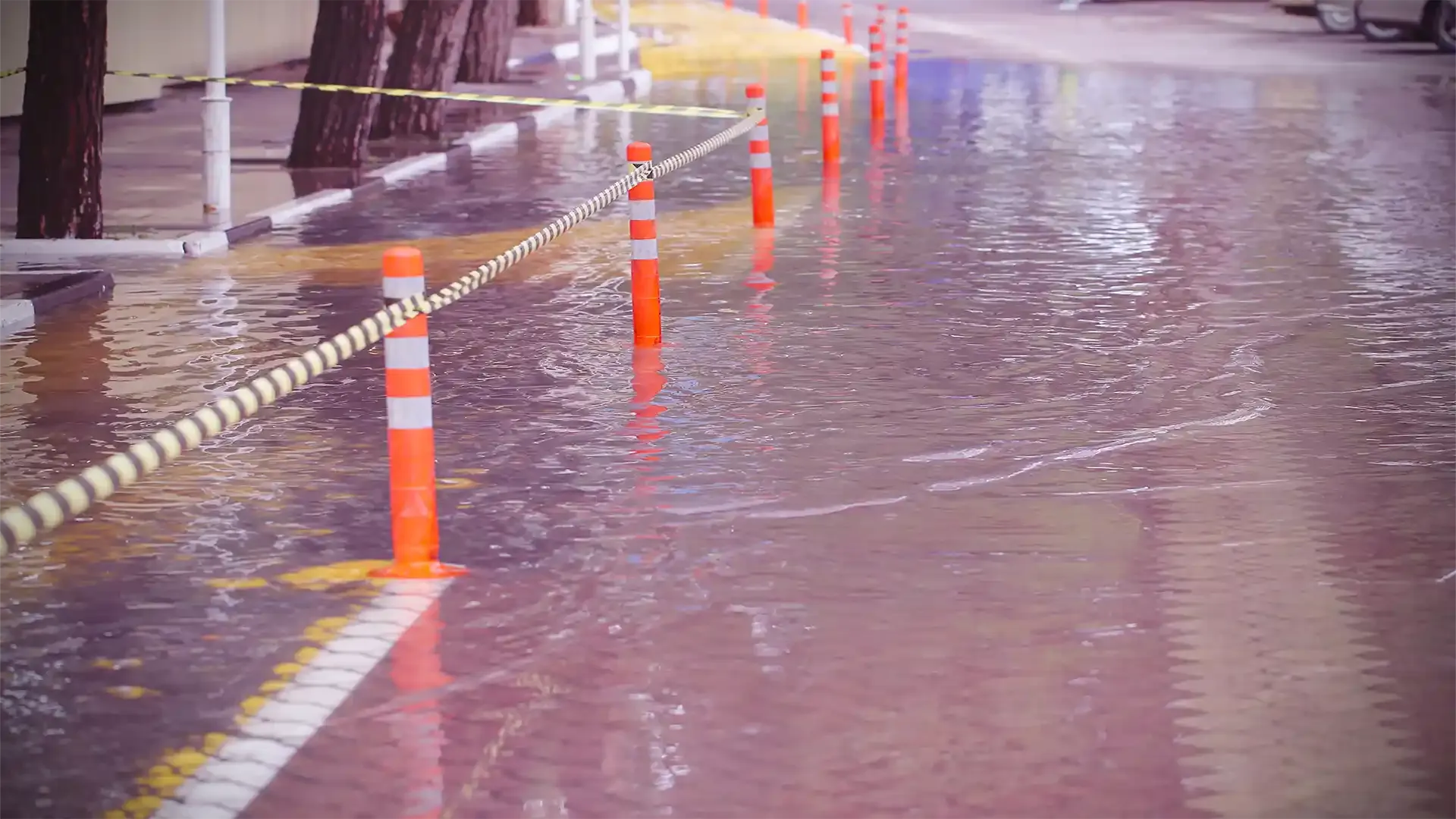
Heavy rain fell over July 29 and July 30, 2010, and flooding damaged the landowners’ real and personal property. The opinion references measurements at the NWS station at the Sioux Falls airport of 0.72 inches on July 29 and 2.23 inches on July 30, and it describes approximately 1.9 inches falling in a two-hour period early on July 30. The landowners maintained that they had not experienced this kind of surface flooding before these events.
November 2010: Landowners Filed Suit Alleging Highway-Related Flooding Damage
In November 2010, the landowners filed a complaint (and later amended it) seeking damages and a permanent injunction, asserting negligence, trespass, and inverse condemnation claims against the State and the City. The State answered and sought dismissal and summary judgment based on sovereign immunity arguments tied to roadway design and engineering. The circuit court denied those motions at that stage of the case.
2013: After Rupert v. City of Rapid City (2013 S.D. 13), Claims Narrowed to Inverse Condemnation; City Settlement and State Cross-Claim Followed
After this Court’s decision in Rupert, the landowners filed a second amended complaint dismissing the tort claims and proceeding only on inverse condemnation under the South Dakota Constitution. The landowners and the City reached a confidential settlement, and the State sought to pursue a cross-claim against the City for contribution and indemnity based on relative degrees of fault. Over the landowners’ objection, the circuit court permitted the cross-claim.
February 18–20, 2014: Bench Trial on Liability Included Meteorology and Drainage-Design Testimony
The liability phase proceeded as a court trial, with expert and technical testimony addressing storm characterization and how drainage capacity, culvert flow, and overtopping pathways related to the flooding. The landowners presented testimony from Arthur Umland (former NWS lead forecaster), Kevin Goeden (DOT bridge-design program manager), Jon Peters (Lincoln County floodplain and GIS administrator), Mark Mainelli (civil engineer), and Kevin Goff (licensed engineer). The State presented testimony from Bruce Crumb (DOT highway maintenance), Chad Hanisch (engineer at Infrastructure Design Group), Donald Harmon (former NWS chief meteorologist), and Dr. Dennis Todey (state climatologist and SDSU faculty).
Post-Trial 2014: Circuit Court Found State Responsible for Flooding Under Inverse Condemnation
Following the bench trial, the circuit court entered findings and a liability judgment holding the State responsible for flooding the landowners’ properties under an inverse condemnation theory. The court found the culverts were of insufficient size to handle the drainage needs and described a sequence in which water backed up, overtopped a ditch block, and entered the sub-basin containing the properties. The judgment also stated that the State acquired no estate or property interest in the landowners’ land.
December 15–18, 2014: Jury Trial Addressed Damages After Liability Was Set
With liability decided, the damages phase proceeded to a jury trial in mid-December 2014. The jury awarded individualized damages to each set of landowners based on the claimed flooding impacts. Those damages became final subject to the later, separate dispute over whether litigation expenses could be shifted to the State.
January 12, 2016: South Dakota Supreme Court Heard Argument on the Related Appeals
The appellate record reflects argument on January 12, 2016, before the Supreme Court of South Dakota. The issues included challenges to the liability findings and, separately, whether attorney fees and litigation expenses were legally recoverable after the landowners prevailed. The appeals thus presented both a technical record review and a statutory authority question.
November 21, 2017: Supreme Court Affirmed Liability and Deferred to Trial-Level Credibility Determinations
In the liability appeal, the Supreme Court affirmed and explained that it was not persuaded the circuit court’s credibility determinations or causation findings were clearly erroneous on the record reviewed. In addressing the competing rainfall evidence, the opinion notes that the circuit court permitted Dr. Todey’s testimony but ultimately rejected it, finding credible the rainfall analysis offered by the landowners’ expert Arthur Umland using hourly measurements and statistical data. The affirmance also sustained findings describing drainage capacity, culvert adequacy, and the sequence of overflow conditions tied to the flooding.
November 21, 2017: Supreme Court Affirmed Denial of Requested Attorney and Engineering Fees in Separate Appeal
In the companion appeal on litigation expenses, the Supreme Court affirmed the circuit court’s denial of the landowners’ request that the State pay “reasonable attorney, appraisal and engineering fees, and other related costs” under SDCL 5–2–18 and the Uniform Relocation Act framework discussed in the record. The court treated the request as a question of legal authorization for awarding such expenses, rather than revisiting the liability determinations. As a result, the damages judgment remained intact while the separate fee-and-cost request was denied.
Expert Witness Roles in Long v. State: Civil Engineering, Meteorology, and Highway Drainage Evidence
-
Civil Engineering and Drainage Modeling (Plaintiff)
Mark Mainelli is identified in the court record as a civil engineer who testified for the landowners on causation. The opinion indicates the circuit court found his testimony credible and relied on it in resolving the causation dispute. His work is described as including a model of the drainage conditions as they existed during the July 29–30, 2010 event and a comparison to conditions before construction of Highway 11.
-
Meteorology and Rainfall Analysis Expert Witness (Plaintiff and Defense)
Art (Arthur) Umland is identified as the landowners’ expert and described as a former National Weather Service meteorologist, and the opinion notes the circuit court credited his rainfall data. Donald Harmon is identified as the State’s expert and described as a former chief meteorologist in charge of the National Weather Service. Their testimony is presented as competing technical interpretations of rainfall measurements and storm characteristics relevant to the flooding.
-
Climatology and CoCoRaHS Data Expert Witness (Defense)
Dr. Dennis Todey is identified as an associate professor at South Dakota State University and the State Climatologist who testified for the State. The opinion explains that the circuit court allowed his testimony but ultimately did not adopt it, favoring other rainfall evidence. The dispute centered on what rainfall data and framing were appropriate for assessing intensity and estimating peak-flow conditions.
-
Highway Drainage and Bridge-Design Evidence (Plaintiff and Defense)
Kevin Goeden is identified as a program manager in the DOT office of bridge design who testified for the landowners. The record places his testimony in the context of DOT work evaluating the Highway 11 drainage crossing and related hydraulic materials. Bruce Crumb is identified as a lead highway maintenance worker for the DOT who testified for the State, providing the State’s perspective on the highway corridor and drainage conditions.
-
Flood plain Administration and GIS Mapping Expert Witness (Plaintiff)
Jon Peters is identified as Lincoln County’s floodplain administrator and Geographic Information System administrator who testified for the landowners. The record situates his testimony within the factual dispute over basin conditions, mapping context, and flooding impacts near Highway 11 and 85th Street.
-
Engineering on Drainage and Infrastructure Expert Witness (Plaintiff and Defense)
Kevin Goff is identified as a licensed engineer at Clark Engineering & Consulting who testified for the landowners. Chad Hanisch is identified as an engineer at Infrastructure Design Group who testified for the State.
Legal Strategy Lessons from Long v. State
-
Build the inverse condemnation theory around mechanism-based causation.
The core issue was whether the highway-and-culvert configuration caused a constitutional damaging during the July 2010 event.
-
Treat agency hydraulic documents as the backbone of the as-built narrative.
DOT drainage materials defined what was studied, what was changed, and what remained unchanged.
-
Rainfall measurement choices can be outcome-relevant.
Hourly intensity versus aggregate totals materially affected peak-flow assumptions.
-
Separate winning liability from winning fees.
Prevailing on inverse condemnation did not establish entitlement to attorney fees.
-
Anchor technical findings for appellate resilience.
Credibility-based findings tied to physical drainage pathways were difficult to disturb on appeal.
Conclusion
The Long v. State litigation demonstrates how inverse condemnation claims arising from public-works flooding can turn on detailed technical proof, including culvert capacity, drainage pathways, and rainfall characterization. The South Dakota Supreme Court affirmed the liability and damages judgment while deferring to trial-level factfinding in a technically contested record.
In the companion appeal, the Court separately affirmed denial of attorney fees and litigation expenses, emphasizing that cost recovery depends on statutory authorization rather than success on the merits alone. Together, the decisions highlight the importance of disciplined engineering records and clearly framed causation theories, while treating fee recovery as a distinct legal inquiry.