

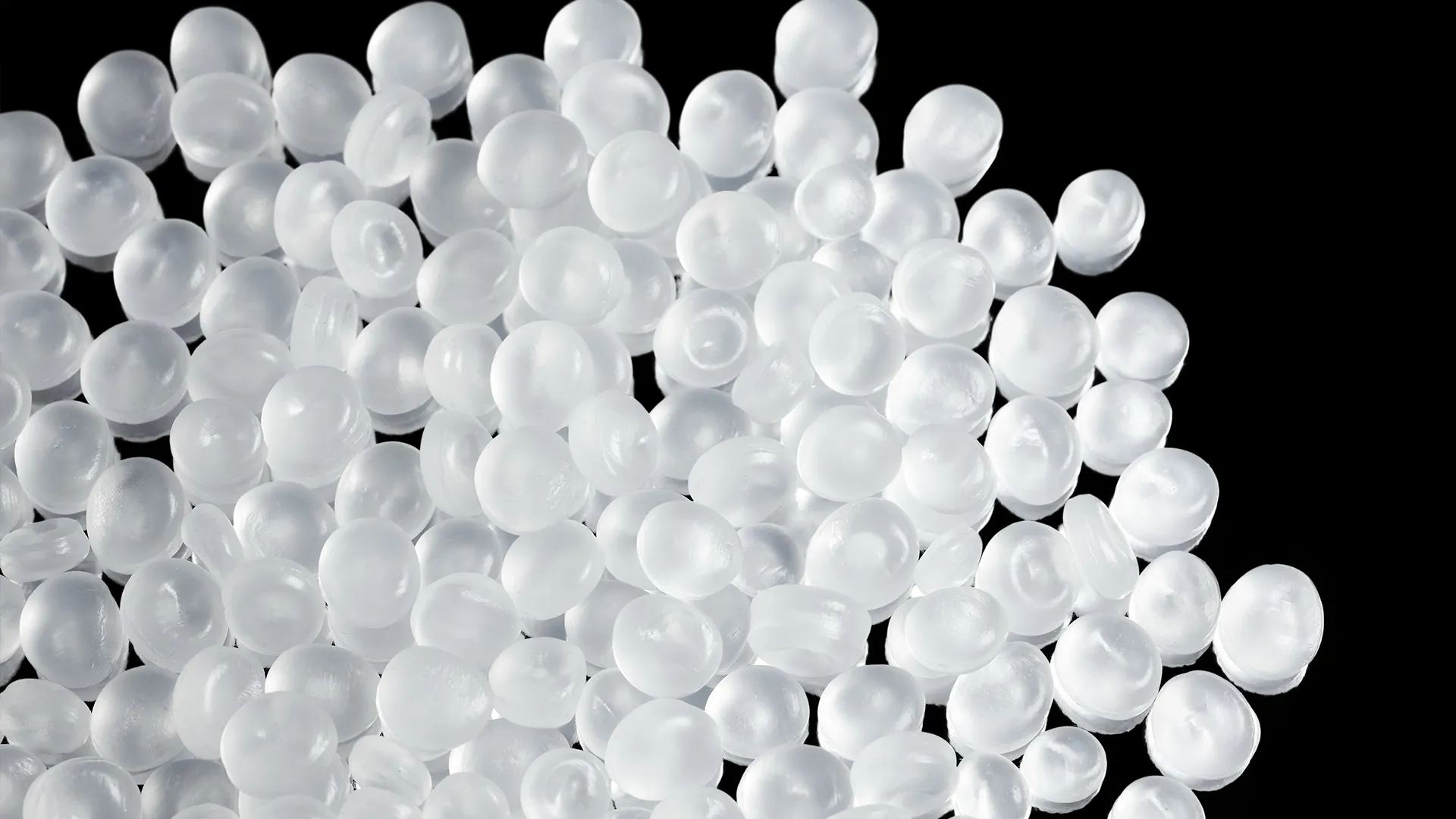
Understanding Polymer Failures in Product Liability Cases
Polymer and plastics failure analysis helps determine why a plastic product or component fractured, degraded, deformed, or failed during use. In product liability litigation, these investigations may help assess whether design or manufacturing conditions, mechanical loading, material degradation, or environmental exposure contributed to a product failure, individually or in combination.
This guide explains common polymer failure mechanisms, how qualified experts investigate physical evidence and material properties, and how technical findings may inform disputes involving product defects and causation.
Common Causes of Polymer and Plastics Failure
Mechanical stress, chemical exposure, environmental degradation, and manufacturing variations may contribute individually or together to plastic component failure.
Mechanical Fracture and Stress Concentration
Mechanical failure may occur when applied loads exceed a component's capacity or when damage develops under sustained or repeated stress.
Potential contributing factors include:
Excessive tensile, bending, or impact loads.
Repeated loading that produces fatigue damage.
Sustained stress that causes creep deformation or delayed cracking.
Sharp corners, notches, openings, or other stress-concentrating features.
Material properties unsuitable for anticipated loading conditions.
Fracture location, surface characteristics, component geometry, and loading history may help distinguish sudden overload from progressive damage.
A fractured component does not necessarily indicate a product defect. Investigators must consider whether the material and design were appropriate for anticipated use conditions and whether the evidence supports the proposed failure sequence.
Environmental Stress Cracking and Chemical Exposure
Environmental stress cracking occurs when a susceptible polymer develops cracks through the combined effects of stress and an environmental substance that promotes cracking.
Potential exposures include cleaning agents, solvents, detergents, lubricants, and other chemicals encountered during manufacturing, maintenance, or use.
Research on high-density polyethylene demonstrates that environmental liquids can influence crack propagation under sustained loading. The effects depend on the polymer formulation, chemical environment, applied stress, and testing conditions.
In product liability disputes, investigators may examine whether chemical exposure was reasonably anticipated, whether the material was compatible with that exposure, and whether the observed cracking is consistent with environmental stress cracking.
Thermal, Ultraviolet, and Oxidative Degradation
Heat, ultraviolet radiation, oxygen, moisture, and other environmental conditions can alter polymer properties over time.
Depending on the material and exposure, degradation may affect molecular structure, stiffness, strength, flexibility, or resistance to cracking.
A National Institute of Standards and Technology study examined chemical and mechanical changes in ultraviolet-exposed polyesters using Fourier transform infrared spectroscopy and dynamic mechanical analysis. Combining these techniques can provide useful findings, although results from one polymer system cannot automatically be applied to other materials.
For litigation purposes, detecting degradation is only the beginning. Investigators may also need to determine when the changes occurred, whether they materially affected performance, and whether another mechanism better explains the failure.
Manufacturing and Processing-Related Weaknesses
Manufacturing conditions can affect plastic component performance even when the specified polymer is otherwise suitable for its intended application.
Potential issues include:
Incomplete mold filling or other observed molding irregularities.
Weld lines or knit lines associated with localized weakness.
Residual stresses introduced during molding, cooling, or assembly.
Molding conditions associated with material degradation.
Incorrect resin grades, formulations, or additives.
Dimensional variations affecting component fit or structural performance.
Investigators may compare the failed component with design specifications, manufacturing records, quality-control results, and suitable comparison samples.
A manufacturing irregularity does not automatically establish the cause of failure. Its technical significance depends on whether it contributed to the observed damage under the relevant operating conditions.
Evaluating Product Defects and Service-Related Factors
Polymer failure investigations often examine whether damage resulted from product design, manufacturing conditions, subsequent use, or interacting causes.
Design-related conditions may involve unsuitable material selection, inadequate wall thickness, unfavorable geometry, or insufficient consideration of expected loads and environmental exposure.
Manufacturing-related conditions may include contamination, molding irregularities, processing variations, or material substitutions. These conditions may cause a component to depart from its intended specifications or affect its performance.
Service-related conditions may involve unexpected loading, improper installation, chemical exposure, modification, or deterioration during use.
These categories are not always mutually exclusive. For example, residual stress introduced during manufacturing may contribute to cracking after a component encounters a particular chemical environment.
Evaluating the significance of these conditions requires comparing physical evidence with the product's design requirements, manufacturing history, and actual service environment.
Identifying a physical failure mechanism does not, by itself, establish a legal defect or liability. Applicable product liability standards vary by jurisdiction and type of claim.
How Experts Investigate Polymer and Plastics Failures
Polymer failure analysis typically combines physical examination, material characterization, laboratory testing, and review of design and service records. The appropriate methods depend on the disputed failure mechanism and the condition of the available evidence.
Physical Evidence Preservation and Examination
A failed component may contain fracture features, deposits, deformation patterns, or other evidence relevant to the failure sequence.
Before destructive testing, investigators may document:
Component condition, orientation, and dimensions.
Fracture locations and visible crack patterns.
Surface deposits, discoloration, or contamination.
Deformation and associated component damage.
Evidence handling, storage, and chain of custody.
Cleaning, cutting, heating, or mechanically testing a component may alter important evidence.
The National Institute of Justice emphasizes careful documentation during destructive testing, preservation of remaining evidence where feasible, and compliance with applicable procedural requirements.
Testing plans should also account for applicable preservation obligations, inspection agreements, and court orders.
When available, unaffected portions of the failed component, unused products, or appropriately matched exemplars may provide useful comparisons.
Review of Design, Manufacturing, and Service Records
Physical findings should be evaluated alongside engineering drawings, resin specifications, manufacturing records, quality-control results, maintenance histories, and product complaint documentation.
Design records may help assess component geometry and material selection against anticipated loads, while manufacturing and service records may reveal processing variations, loading events, chemical exposure, temperature changes, or relevant maintenance practices.
The reliability of these comparisons depends on the completeness and relevance of the available records.
Material Characterization and Laboratory Testing
Laboratory testing can help characterize polymer composition, mechanical properties, thermal behavior, degradation, and fracture features.
Common techniques include:
Optical microscopy and scanning electron microscopy: Examine fracture surfaces, crack features, voids, and material irregularities.
Fourier transform infrared spectroscopy (FTIR): Characterizes polymer chemistry and may identify certain degradation indicators or contaminants.
Differential scanning calorimetry (DSC): Measures thermal transition temperatures and associated heat-flow characteristics, including enthalpies of fusion and crystallization. Results may assist polymer identification and, with suitable reference data and assumptions, estimation of crystallinity in applicable materials.
Tensile testing: Evaluates mechanical properties such as tensile strength, stiffness, and elongation under defined conditions.
Impact testing: Evaluates responses to specified impact conditions when relevant to the reported failure.
Chemical resistance and environmental exposure testing: Examines material responses to selected substances, temperatures, stresses, and exposure durations.
Technical guidance from the National Institute of Standards and Technology explains how differential scanning calorimetry measures thermal transitions in polymer materials. Published research also describes chemical resistance testing using controlled exposure conditions and evaluation of changes in material properties. Standardized tensile testing may help assess mechanical properties under defined conditions.
These testing methods require careful interpretation. Tensile properties may vary with specimen preparation, testing speed, and environmental conditions, while chemical resistance results must account for differences between laboratory and actual service conditions. No single test necessarily identifies the cause of failure.
Evaluating Competing Failure Explanations
Investigators compare physical evidence and test results to assess competing explanations, such as excessive loading, manufacturing weaknesses, environmental degradation, or interacting conditions.
A qualified expert may consider whether:
Fracture characteristics are consistent with the proposed loading event.
Chemical or thermal findings support a degradation mechanism.
Material properties differ meaningfully from specifications or suitable comparison samples.
Manufacturing conditions could have introduced weaknesses.
Service history supports or contradicts competing explanations.
A reliable analysis should distinguish observations from interpretations, identify significant uncertainties, and disclose when the evidence cannot support a specific failure explanation.
How Polymer Failure Analysis Relates to Product Liability Claims
Polymer failure findings may inform design defect, manufacturing defect, and failure-to-warn allegations, but their legal significance depends on the issues raised by the claim. These findings do not independently determine liability.
Design Defect Allegations
An appropriately qualified expert may evaluate whether a polymer and component design were suitable for reasonably anticipated operating conditions, considering material selection, geometry, loading assumptions, and potential alternative designs.
Where relevant, the analysis may address whether different materials, dimensions, or protective features would have changed the component's predicted performance.
The legal significance of alternative designs depends on the applicable jurisdiction's product liability requirements.
Manufacturing Defect Allegations
Manufacturing investigations may evaluate whether the failed component departed from relevant design or production specifications.
Evidence may include material identification, dimensional measurements, molding characteristics, processing records, and comparisons with representative components.
Even when a manufacturing variation is identified, further analysis may be necessary to determine whether it contributed to the reported failure.
Failure-to-Warn and Use-Condition Disputes
Some disputes involve allegations that instructions or warnings inadequately addressed chemical incompatibilities, temperature limitations, loading restrictions, or foreseeable operating conditions.
Polymer testing may help characterize relevant material limitations and the potential consequences of particular exposures.
Whether instructions or warnings were legally adequate requires analysis under the applicable jurisdiction's law and may involve expertise beyond polymer science.
Expert Testimony and Evidentiary Reliability in Polymer Failure Litigation
In federal litigation, polymer failure expert testimony is subject to Federal Rule of Evidence 702.
Under the rule, the proponent must demonstrate to the court that it is more likely than not that the testimony meets the applicable requirements. The witness must be appropriately qualified, and the specialized knowledge must assist the factfinder. The testimony must also be based on sufficient facts or data and reliable principles and methods, with opinions that reflect a reliable application of those methods to the facts of the case.
In Daubert v. Merrell Dow Pharmaceuticals, Inc., 509 U.S. 579 (1993), the Supreme Court of the United States addressed the judicial evaluation of scientific expert testimony. In Kumho Tire Co. v. Carmichael, 526 U.S. 137 (1999), the Court clarified that the reliability inquiry extends to technical and other specialized expert testimony.
For polymer failure analysis, these principles underscore the importance of explaining how physical observations, testing, comparisons, and engineering reasoning support an expert's conclusions.
Fuesting v. Zimmer: Reliability of Expert Causation Opinions
In Fuesting v. Zimmer, Inc., 421 F.3d 528 (7th Cir. 2005), the litigation involved allegations that the sterilization process used for a polyethylene knee implant contributed to oxidation, deterioration, and component failure.
In 2005, the United States Court of Appeals for the Seventh Circuit held that the district court erred in admitting Dr. James Pugh's opinions on causation and defect. The court concluded that Pugh had not reliably connected general principles concerning gamma irradiation, oxidation, and polyethylene degradation to the failure of the particular implant. It also found his comparison of the manufacturer's sterilization method with proposed alternatives inadequate. Although the court noted disagreement over whether Pugh had sufficiently considered alternative causes, its reliability determination rested on broader methodological deficiencies.
Following rehearing in 2006, the Seventh Circuit revised its original remedy and remanded the case for further proceedings, while leaving its conclusion regarding the improper admission of Pugh's testimony intact.
On remand, the district court excluded Dr. Robert Rose's causation testimony and restricted Dr. James McKechnie's testimony to prevent reliance on the excluded causation theory. The court then granted summary judgment for Zimmer. In a nonprecedential disposition in 2010, the Seventh Circuit affirmed, emphasizing that Rose had not reliably connected his general oxidation theory to the particular implant or adequately addressed the possibility that oxidation occurred after the implant was removed.
The case illustrates why an expert who attributes a product failure to degradation must reliably connect that proposed mechanism to the evidence concerning the particular product.
Practical Considerations for Attorneys and Claims Professionals
Early technical evaluation can help counsel identify relevant evidence and determine which expertise may be appropriate, while accounting for applicable evidence-preservation obligations.
Important considerations include:
Evidence availability: Determine whether the failed component, adjoining parts, fractured pieces, and suitable exemplars remain available.
Document collection: Identify material specifications, design information, manufacturing records, and relevant service history.
Testing requirements: Consider whether proposed examinations may alter evidence and whether testing protocols or inspection agreements are necessary.
Expert qualifications: Match the professional's experience to the polymer, manufacturing process, component design, and proposed methods.
Alternative causes: Assess whether the available evidence permits meaningful evaluation of competing failure explanations.
Depending on the disputed issues, a polymer scientist or materials engineer may address chemical characterization, material properties, and degradation, while plastics processing or mechanical engineering specialists may evaluate molding conditions, component geometry, loading, or design performance. Some investigations require expertise from more than one discipline.
Frequently Asked Questions
Can a fractured plastic component establish that a product was defective?
Not necessarily. A fracture may provide evidence of a product defect, but it does not automatically establish one. In some jurisdictions, a defect may be inferred from circumstantial evidence of a product malfunction without identifying a specific defect, provided the applicable legal requirements are satisfied. Evaluating material properties, design, manufacturing history, service conditions, and reasonable alternative causes may help determine which explanations the evidence supports.
Can polymer testing distinguish manufacturing defects from chemical degradation?
Testing may help distinguish these conditions through material characterization, microscopy, mechanical testing, and comparison with manufacturing records. However, processing conditions and environmental exposure can interact, and testing may not identify a single cause.
Does polymer failure analysis require an identical comparison product?
Not necessarily. Suitable exemplars can provide useful comparisons, but their value depends on similarities in formulation, manufacturing conditions, age, and service history. Some investigations can proceed without identical comparison specimens, although the limitations must be considered.
What qualifications should a polymer failure expert possess?
Relevant qualifications may include experience in polymer chemistry, materials engineering, plastics manufacturing, fracture analysis, or mechanical testing. The appropriate expertise depends on the disputed issue. When expert testimony is offered in federal court, the witness's qualifications and proposed testimony must satisfy the applicable requirements of Federal Rule of Evidence 702.
Are ASTM standards mandatory in plastics failure investigations?
Not automatically. ASTM methods provide standardized procedures, but whether a particular standard is required depends on applicable regulations, contracts, specifications, or other governing requirements. Experts should select methods appropriate to the material and explain relevant testing limitations.
References
- Review of Techniques for Monitoring the Environmental Degradation of Polymers
- Environmental Stress Cracking of High-Density Polyethylene Applying Linear Elastic Fracture Mechanics. Polymers, 14(12), 2415.
- Exploration of Dynamic Mechanical Analysis for Studying Degraded Polymers: Dynamic Mechanical Changes After Ultraviolet Exposure (NIST)
- National Institute of Justice, 2023. Law 101: Legal Guide for the Forensic Expert: Destructive Testing
- Differential Scanning Calorimeter (NIST)
- Degradation and Long-Term Response Evaluation of Polymeric Components Produced by Additive Manufacturing. Journal of Manufacturing and Materials Processing, 10(3), 102.
- Federal Rule of Evidence 702: Testimony by Expert Witnesses
- Daubert v. Merrell Dow Pharmaceuticals, Inc., 509 U.S. 579 (1993)
- Kumho Tire Co. v. Carmichael, 526 U.S. 137 (1999)
- Fuesting v. Zimmer, 421 F.3d 528 (7th Cir. 2005)
- ORDER - Fuesting v. Zimmer, No. 09-1362 (7th Cir. Jan. 25, 2010)
