DuPont C-8/PFOA MDL: Background, Litigation Path, and Outcomes
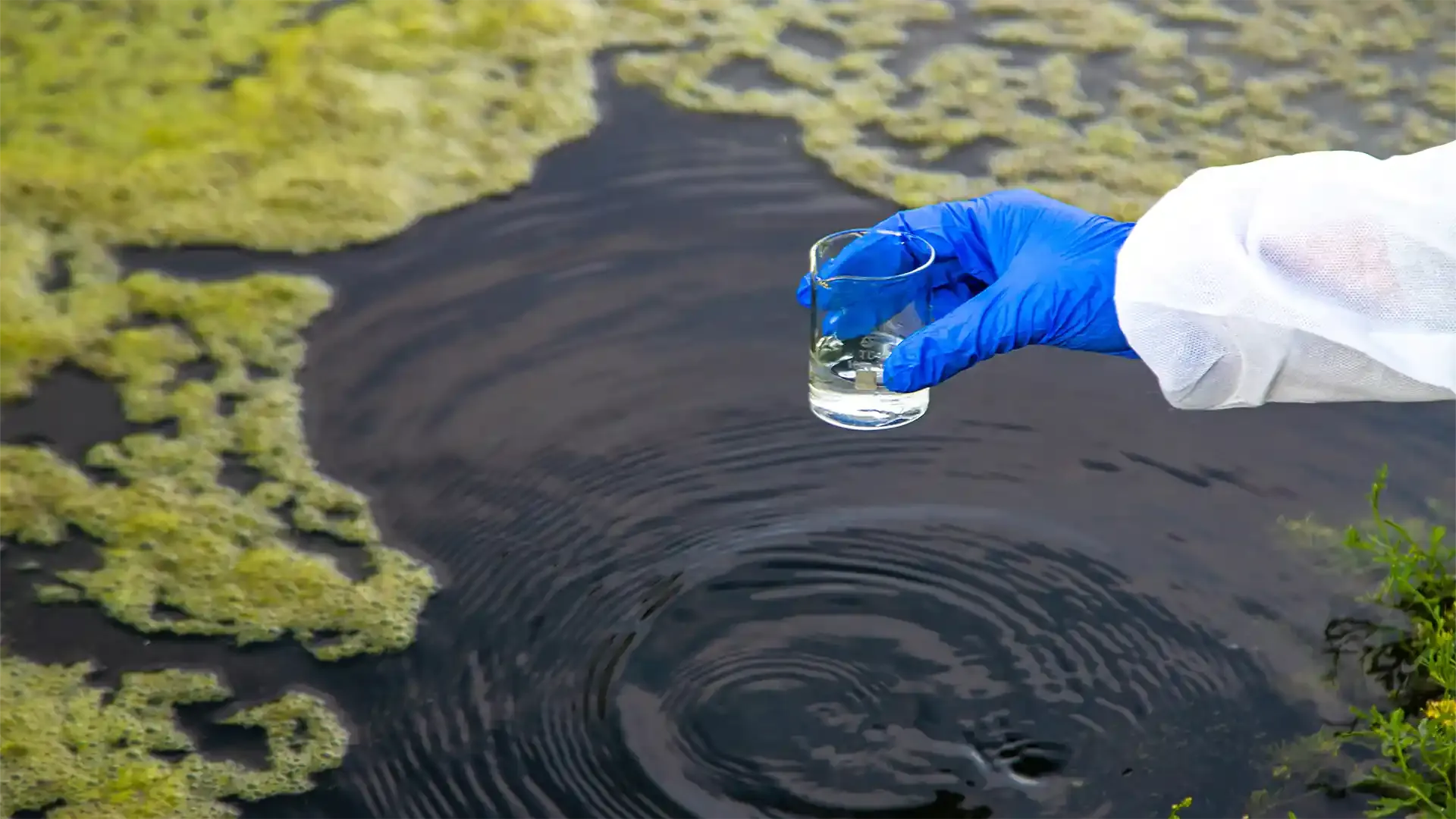
The In re E.I. du Pont de Nemours and Company C-8 Personal Injury Litigation (MDL No. 2433) was centralized in the Southern District of Ohio in April 2013 to manage thousands of lawsuits concerning exposure to C-8 (also called PFOA) released from DuPont’s Washington Works plant near Parkersburg, West Virginia. Water supplies in parts of Ohio and West Virginia were contaminated, leading to claims of serious health effects. These suits stemmed from the Leach class action (filed 2001, settlement approved 2005), which created a Science Panel of three independent epidemiologists to evaluate health outcomes among more than 69,000 residents. After seven years of study, the panel issued findings in 2011–2012 linking C-8 exposure to six diseases: kidney cancer, testicular cancer, thyroid disease, ulcerative colitis, high cholesterol, and pregnancy-induced hypertension/preeclampsia. Under the Leach Settlement Agreement, DuPont agreed not to contest general causation for these linked diseases, while individual plaintiffs still had to prove specific causation in their cases.
The MDL ultimately involved nearly 3,700 lawsuits and several jury trials. Key bellwether outcomes included Bartlett (kidney cancer; $1.6 million verdict) and Freeman (testicular cancer; $5.1 million compensatory and $0.5 million punitive). The first non-bellwether trial, Vigneron (testicular cancer), produced a $2 million compensatory verdict and a $10.5 million punitive award. In Abbott, a jury awarded $40 million to Travis Abbott and $10 million to Julie Abbott, though her award was reduced to $250,000 under the Ohio Tort Reform Act; the Sixth Circuit affirmed the verdicts in 2022. Settlements came in stages: DuPont announced a $670.7 million settlement-in-principle in February 2017, resolving about 3,500 cases, followed by a second settlement in 2021 and a final settlement in 2024 that closed 73 remaining claims. With no active cases pending, the court formally suggested dissolving MDL 2433 on February 12, 2025. Judicial Panel on Multidistrict Litigation orders in 2018 and 2022 confirmed continued coordination of related lawsuits. In the broader context of chemical accidents, the DuPont C-8 litigation is notable for its reliance on scientific findings, the use of bellwether trials to steer outcomes, and its step-by-step resolution through multiple settlement phases.
DuPont C-8/PFOA Chemical Accidents Litigation Timeline: Drinking Water Contamination, Trials, and Settlements
August 31, 2001: Leach Class Action Filed in West Virginia
Residents living near DuPont’s Washington Works plant filed a lawsuit alleging that C-8 (PFOA) discharges had contaminated local water supplies in Ohio and West Virginia. The West Virginia court certified a mandatory class in 2002 covering about 80,000 residents across several affected water districts. This filing became the foundation for later federal multidistrict litigation.
February 28, 2005: Leach Settlement Approved and Science Panel Created
The Leach Settlement required DuPont to fund a comprehensive epidemiological study and water treatment projects. A Science Panel of three independent epidemiologists was tasked with evaluating health impacts on more than 69,000 residents, and DuPont agreed not to dispute general causation for any disease the panel found linked to C-8 exposure. The agreement paused further lawsuits while the study was conducted.
2011–2012: Science Panel Issues Probable Link Findings
After seven years of study, the Science Panel reported a Probable Link between C-8 exposure and six diseases: kidney cancer, testicular cancer, thyroid disease, ulcerative colitis, high cholesterol, and pregnancy-induced hypertension/preeclampsia. Class members with these diseases could pursue personal-injury suits, while claims based on other conditions were barred. These findings defined the scope of all subsequent litigation.
April 2013: Federal Multidistrict Litigation Centralized in Ohio
The Judicial Panel on Multidistrict Litigation consolidated thousands of lawsuits into In re E.I. du Pont de Nemours and Company C-8 Personal Injury Litigation (MDL No. 2433) in the Southern District of Ohio before Judge Edmund A. Sargus, Jr. Centralization streamlined discovery, coordinated rulings, and prepared the way for bellwether trials.
October 2015: Bartlett Bellwether Trial and $1.6M Verdict
The first bellwether case, brought by Carla Bartlett for kidney cancer, went to trial. The jury awarded her $1.6 million in compensatory damages, establishing an early precedent for how the MDL would apply the Leach Agreement’s general-causation terms.
July 2016: Freeman Bellwether Trial: $5.1M Compensatory and $0.5M Punitive Awards
David Freeman’s testicular-cancer case became the second bellwether trial, with detailed court rulings on expert testimony. On July 6, 2016, the jury awarded $5.1 million in compensatory damages, followed by an additional $0.5 million in punitive damages on July 8, 2016. These verdicts further reinforced the viability of claims under the Leach framework.
December 21, 2016: Vigneron Verdict: $2M Compensatory
Kenneth Vigneron’s testicular-cancer case was the first non-bellwether trial. The jury awarded $2 million in compensatory damages, and the court’s evidentiary orders confirmed consistent application of causation rules.
January 5, 2017: Vigneron Punitive Award: $10.5M
A few weeks after the compensatory verdict, the jury imposed $10.5 million in punitive damages against DuPont, further shaping settlement pressure in the MDL.
February 13, 2017: $670.7 Million Global Settlement Announced
DuPont announced a $670.7 million settlement-in-principle resolving about 3,500 MDL cases. This marked the first major resolution phase following the initial bellwether verdicts.
April 2018: JPML Confirms Continued Transfers After Settlement
Despite the large settlement, new cases were still being filed. The JPML ordered continued transfer of tag-along actions, noting that centralization remained necessary for consistency and efficiency.
January 2020: Abbott Trial: $40M and $10M Jury Awards
Travis Abbott was awarded $40 million and his wife Julie Abbott $10 million for claims tied to testicular cancer and its consequences. Julie’s award was later reduced to $250,000 under the Ohio Tort Reform Act. The trial highlighted the application of collateral estoppel and the Leach Agreement to evidentiary rulings.
2021: Second Settlement Wave Resolves Additional Cases
After the 2017 resolution, another settlement in 2021 resolved most of the remaining actions. Court filings note that this reduced the active docket substantially while residual claims proceeded.
December 5, 2022: Sixth Circuit Upholds Abbott Verdicts
The U.S. Court of Appeals for the Sixth Circuit affirmed the Abbott jury awards in full, rejecting DuPont’s arguments on collateral estoppel, evidentiary rulings, and statute-of-limitations defenses. This ruling solidified the MDL’s trial outcomes and interpretation of the Leach Agreement.
December 13, 2022: JPML Order Maintains Coordination
The JPML declined to end tag-along transfers, noting the MDL had included nearly 3,700 cases and five trials, with waves of settlements in 2017 and 2021. The Panel found continued centralization necessary for late-stage efficiency.
2024: Final Settlement Resolves 73 Cases
On the eve of a third trial phase, DuPont and plaintiffs agreed to settle the last 73 cases. This effectively closed the MDL’s active inventory.
February 12, 2025: Court Suggests Dissolution of MDL
With all cases resolved through settlements and completed appeals, Judge Edmund A. Sargus, Jr. granted a motion suggesting dissolution of MDL 2433. This confirmed the litigation’s closure, leaving the earlier jury verdicts and multi-phase settlements as the final outcomes.
Expert Witness Roles in the DuPont C-8/PFOA Chemical Accidents Litigation
-
Oncology and Urology Expert Witnesses
- Court filings identify Dr. Robert Bahnson, a urologic oncologist, who testified on specific causation in a testicular cancer case, and Dr. Tony Luongo, who served as a defense rebuttal expert in the Vigneron trial. Their testimony addressed whether C-8 exposure substantially contributed to an individual’s cancer, making their work central to how juries weighed medical causation.
-
Epidemiology Expert Witness
- The Science Panel, created under the 2005 Leach Settlement Agreement, was composed of three independent epidemiologists jointly selected by DuPont and class counsel. Its mandate was to analyze health data and blood samples from more than 69,000 class members participating in what became known as the C-8 Health Project, one of the most extensive community health studies in U.S. environmental litigation.
- After seven years of research, the panel issued a series of reports in 2011–2012 identifying a “Probable Link” between C-8 exposure and six diseases: kidney cancer, testicular cancer, thyroid disease, ulcerative colitis, diagnosed high cholesterol, and pregnancy-induced hypertension/preeclampsia. Under the Leach Agreement, these findings were binding, meaning DuPont agreed not to dispute general causation for the linked diseases, and only individual-specific causation and damages were left to be proven in later personal injury suits.
-
Toxicology Expert Witness
- Toxicologists are often engaged in chemical exposure litigation to explain the biological mechanisms of chemicals in the body. They can describe how a substance like PFOA persists in blood, impacts organs over time, and creates pathways to disease. Their role helps courts and juries connect scientific data with individual health outcomes.
-
Environmental Science Expert Witness
- Environmental scientists are often consulted to assess how industrial discharges move through air, soil, and groundwater. They provide insight into how contaminants migrate into public water systems and affect surrounding communities. Their evaluations often establish the link between environmental releases and human exposure.
-
Chemical Accidents Expert Witness
- Chemical accidents experts are often called to review the handling, release, and emergency response involving hazardous substances. They assess whether industry practices met safety standards and how lapses contributed to environmental contamination. Their perspective connects industrial operations with the outcomes of chemical accidents.
-
Industrial Hygiene Expert Witness
- Industrial hygienists are often consulted to measure exposure levels in workplace or community settings. They evaluate monitoring data, review regulatory compliance, and explain how exposure limits are applied in practice. Their testimony provides clarity on the adequacy of protective measures and safety protocols.
Legal Strategy Insights from the DuPont C-8/PFOA Chemical Accidents Litigation
-
Leveraging Class Action Settlements to Shape Future Litigation
The Leach Settlement of 2005 created a Science Panel whose findings became binding on subsequent cases. This structure limited disputes over general causation and allowed plaintiffs to focus on specific causation and damages. Attorneys can study how settlement frameworks influence the trajectory of later multidistrict litigation.
-
The Role of Epidemiology in Establishing Causation
The Science Panel’s seven-year study of more than 69,000 residents produced Probable Link findings that determined which diseases could be litigated. This highlights how epidemiological evidence can shift litigation strategy by narrowing contested issues. Counsel should consider how court-approved scientific studies can be used to streamline future toxic tort cases.
-
Importance of Bellwether Trials in Multidistrict Litigation
Early bellwether cases such as Bartlett and Freeman set the tone for negotiations and jury perception of damages. These verdicts provided valuable data points that influenced settlement decisions. The subsequent non-bellwether Vigneron trial also reinforced jury willingness to award both compensatory and punitive damages, further shaping settlement pressure in the MDL.
-
Appellate Guidance on Collateral Estoppel and Evidentiary Rulings
The Sixth Circuit’s 2022 affirmance in Abbott clarified the application of collateral estoppel and upheld trial-level evidentiary rulings tied to the Leach Agreement. This appellate decision reinforced the weight of prior findings and jury verdicts. Practitioners should note how appellate courts handle consistency across thousands of related cases.
-
Multi-Phase Settlements as a Path to Final Resolution
Global settlements in 2017, 2021, and 2024 resolved nearly 3,700 lawsuits, culminating in the dissolution of the MDL in 2025. Each settlement phase reduced litigation risk while providing structured compensation to claimants. Attorneys may view phased settlements as a practical tool for resolving complex environmental and toxic exposure disputes.
Conclusion
The DuPont C-8/PFOA litigation demonstrates how long-running environmental exposure disputes can evolve from a single class action into one of the most extensive multidistrict proceedings in the United States. Beginning with the 2001 Leach case and the 2005 settlement that established the Science Panel, the litigation moved through years of scientific study, bellwether trials, appellate review, and staged settlements. By February 2025, the court confirmed that nearly 3,700 cases had been resolved through verdicts and settlements, closing one of the most significant toxic tort MDLs in recent decades.
In the broader context of chemical accidents, the case underscores the value of combining scientific evidence, coordinated litigation strategies, and phased resolutions to address widespread contamination. The binding Probable Link findings from the Science Panel streamlined thousands of claims and set the framework for how causation would be treated across the MDL. For attorneys, policymakers, and affected communities, the DuPont C-8/PFOA litigation highlights the importance of structured scientific inquiry, consistent rulings, and comprehensive settlement design in achieving resolution in complex environmental exposure disputes.