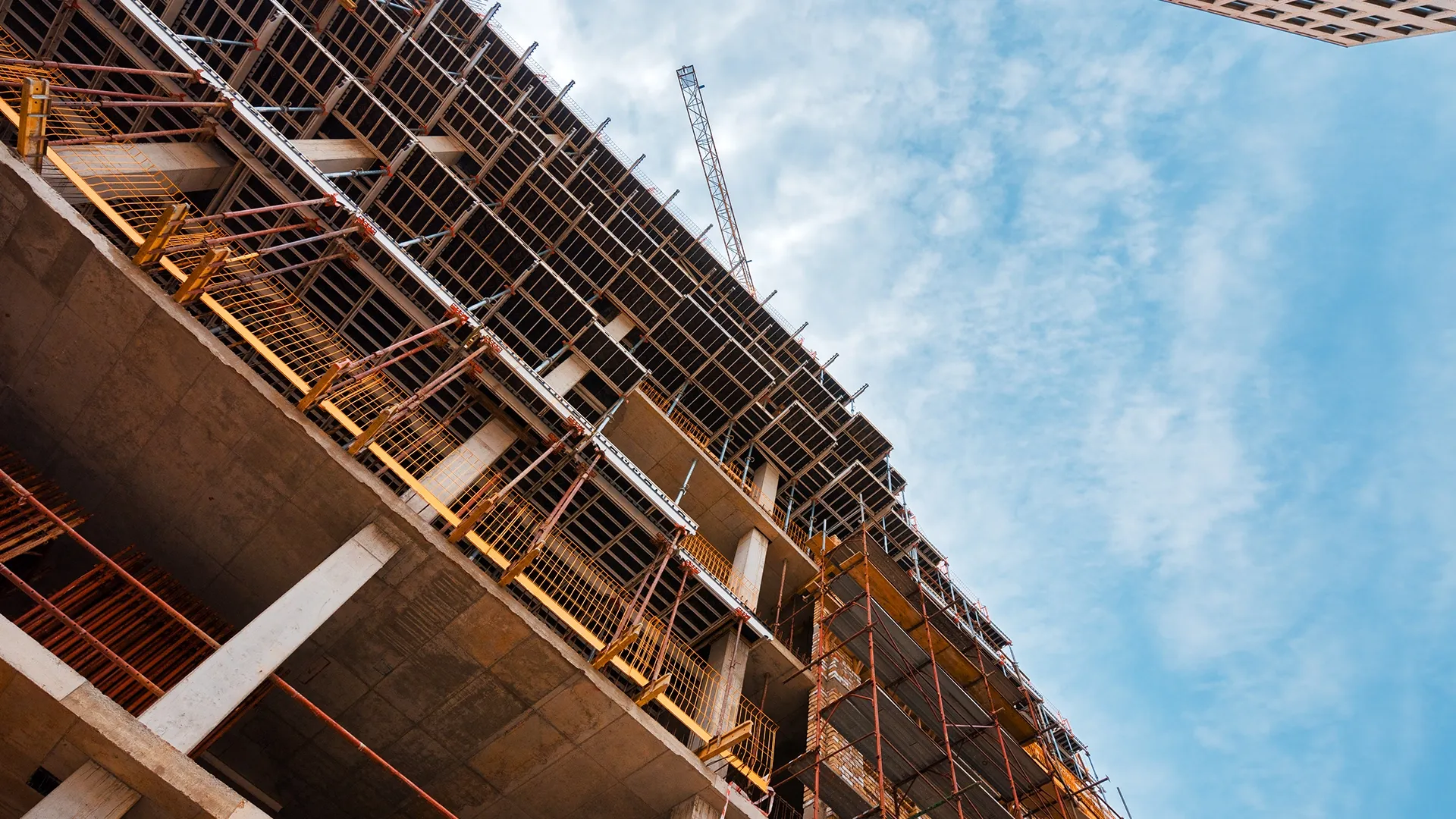
Broadway Wastewater Plant Contract and Construction Cost Claims
A $50 million wastewater treatment plant contract in Corpus Christi, Texas, developed into a prolonged construction dispute after delays, additional expenses, and disagreements over unfinished work disrupted the project. The City of Corpus Christi hired Graham Construction Services, Inc. to replace the Broadway Wastewater Treatment Plant in two phases. Although the new facility began treating wastewater in 2014, the parties disagreed over whether the first phase had been substantially completed, who was responsible for construction delays, and whether Graham remained obligated to perform the second phase. The contractor eventually left the project without completing Phase 2.
Graham filed a breach of contract lawsuit in May 2016, seeking compensation for construction cost overruns, delays, and additional expenses. The City counterclaimed and sought recovery under a performance bond issued by Travelers Casualty and Surety Company. Following a thirteen-week bench trial, both parties received damages awards. The Texas Thirteenth Court of Appeals later upheld the City's $9.32 million finding for reasonable Phase 2 completion costs while revising separate delay damages. The Supreme Court of Texas denied both petitions for review in October 2025.
Broadway Wastewater Construction Dispute Timeline
December 1, 2009: City Awards $50 Million Construction Contract
The City of Corpus Christi awarded Graham Construction Services a contract worth approximately $50 million to replace the Broadway Wastewater Treatment Plant. The agreement divided construction into two phases, with the first covering demolition and most of the new infrastructure and the second covering additional improvements intended to increase treatment capacity. The contract provided 1,100 calendar days for completing the project and contained provisions governing schedule extensions, construction changes, and daily damages for late completion. Carollo Engineers, P.C., served as the engineer of record, while Travelers provided the required performance bond.
February 24, 2010: Foundation Pile Changes Lead to Delays
Graham requested permission to substitute DeWaal displacement piles for the auger-cast foundation piles specified in the original contract. Carollo approved the substitution on July 16, 2010, but subsequent integrity testing identified anomalies in some installed piles. Additional examinations found that the affected piles had bulged rather than narrowed, and further testing established that they were within acceptable tolerances. The investigation interrupted activities on the project's critical construction paths and became part of Graham's later delay claims.
On June 29, 2011, Carollo representative Rene Aguilar recommended 82 working days, equivalent to 114 calendar days, of schedule relief for the pile-testing delays. Graham received 29 calendar days through Change Order No. 2 and later pursued compensation associated with the remaining 85 days. The parties continued to dispute responsibility for the delays and the resulting financial claims.
July 14, 2013: Graham Pursues $8.6 Million in Added Costs
Representatives of Graham, the City, Carollo, and Freese & Nichols met to discuss unresolved construction delays and project conditions. Graham subsequently submitted a 145-page request for equitable adjustment, known as REA 1, seeking an $8.6 million increase in the contract price and a 191-day schedule extension. The City assigned Freese & Nichols to evaluate the request but did not provide a final response to Graham's proposed adjustments.
In 2014, Graham submitted another request, REA 2, seeking additional compensation and schedule relief. The City retained a consulting firm to review the claims, and settlement discussions followed. The parties did not resolve their differences over the requested payments and construction obligations.
April 2014–October 2015: Phase 1 Completion Remains Disputed
The new facility began treating wastewater using ultraviolet disinfection in March 2014. The following month, Graham requested a certificate recognizing substantial completion of Phase 1. The City declined to issue the certificate, citing outstanding construction items and concerns about the treatment system's performance. On May 19, 2015, Carollo advised the City that Phase 1 had not achieved substantial completion.
The parties also disagreed over lists of remaining construction items and whether the City's objections prevented Graham from proceeding with the next phase. Graham demobilized in October 2015, citing the expense of remaining at the site while the disputes continued. Phase 2, which included additional clarifiers and related pumping infrastructure, remained unfinished.
May 2, 2016: Graham Files Construction Contract Lawsuit
Graham sued the City of Corpus Christi for breach of contract, seeking damages associated with alleged City-caused delays, construction cost overruns, and additional work. The contractor maintained that project administration problems, testing requirements, and unresolved completion issues had increased its expenses and interfered with construction progress.
On June 6, 2016, the City counterclaimed, alleging that Graham had failed to complete its contractual obligations. The City also pursued Travelers under the project's performance bond. Claims involving Carollo and ultraviolet disinfection equipment manufacturer Wedeco were included in the broader litigation. The competing claims concerned the contractor's additional-cost demands and the City's claimed losses from unfinished construction.
December 20, 2016: City Terminates Graham's Construction Contract
The City issued notices of default in October 2016 concerning outstanding Phase 1 work and Graham's failure to complete Phase 2. Graham returned to the project in November and proposed beginning the remaining work by demolishing the backwash filter building. The City directed Graham not to proceed with that demolition, after which the contractor left the site again.
On December 20, 2016, the City issued a notice terminating Graham for cause. The City cited concerns involving the ultraviolet disinfection system and Graham's failure to perform Phase 2. During the subsequent litigation, the trial court concluded that the City had properly terminated the contract and that its direction concerning demolition did not excuse Graham's remaining obligations.
June 25, 2020: Appeals Court Allows Contract Claims to Proceed
Before the merits trial, the City sought dismissal of Graham's claims based on governmental immunity. The trial court rejected the City's jurisdictional challenge to the breach of contract claims, and the City appealed. The Texas Thirteenth Court of Appeals affirmed the ruling on June 25, 2020, allowing the litigation to continue.
The appellate court examined the statutory waiver of governmental immunity applicable to qualifying local-government contracts, including Graham's claim for attorney's fees. The Supreme Court of Texas denied the City's petition for review on December 11, 2020. Proceedings then continued toward a trial addressing construction performance, damages, and responsibility for the delays.
February–September 2022: Trial Court Awards Damages to Both Sides
A thirteen-week bench trial took place between February and April 2022. Thirty-eight witnesses testified, and the parties introduced 2,690 exhibits concerning project administration, construction costs, completion requirements, and disputed delays. The trial court found that Graham had substantially completed Phase 1 as of September 12, 2014, but had breached its obligation to complete Phase 2.
On September 2, 2022, the court entered judgment awarding Graham $4,074,704.14, including direct construction costs, compensable delay damages, retainage, and a separate pile-testing delay award. The City received $5,367,053.62 against Graham and Travelers, calculated from $9,321,211.59 in reasonable and necessary Phase 2 completion costs less the unpaid contract balance of $3,954,157.97. After offsetting the opposing damages awards, the judgment favored the City by $1,292,349.48.
The trial court also rejected Graham's claimed lost labor productivity damages. Its findings questioned the reliability of the calculation method because the claimed losses were not adequately separated among the individual construction disputes. Both parties appealed the judgment.
December 30, 2024: Appeals Court Revises Construction Damages
The Texas Thirteenth Court of Appeals issued a substituted memorandum opinion after withdrawing its November 7, 2024 decision and denying rehearing. The appellate court upheld the City's recovery for the reasonable and necessary cost of completing Phase 2. It found that the combined testimony of construction estimator Brandon Ballengee and civil engineer Scott Hibbs sufficiently supported the $9,321,211.59 completion-cost determination.
The court also ruled that the City was entitled to liquidated damages for 215 days of unexcused Phase 1 delay at $2,600 per day, totaling $559,000. Separately, it reversed Graham's $498,270 award for 85 days of pile-testing delays because the trial court's findings did not support holding the City responsible for those delays. The appellate court affirmed the remainder of the judgment, including the denial of Graham's lost-productivity damages claim.
October 24, 2025: Texas Supreme Court Denies Review
Both parties sought review of the appellate decision. The City challenged portions of the ruling, while Graham and Travelers filed a cross-petition addressing issues decided against them. On October 24, 2025, the Supreme Court of Texas denied both petitions.
The denials left the Thirteenth Court of Appeals' December 30, 2024 judgment in place. The appellate ruling remained the final merits disposition, preserving the City's completion-cost recovery and the adjustments to the competing delay claims.
Construction Cost and Delay Expert Witness Testimony
Construction Cost Estimating Expert Witness (Defense)
Brandon Ballengee, an expert retained by the City of Corpus Christi, testified concerning the estimated reasonable and necessary cost of completing Phase 2. He had previously managed a construction company's estimating department and testified that he had prepared estimates for hundreds of water and wastewater projects. His assignment concerned the proposed construction of clarifiers No. 3 and No. 4 and the return activated sludge and waste activated sludge pumping facilities.
Ballengee used WinEst estimating software, which draws on historical project information and market pricing to calculate construction costs, including geographic adjustments. Working from plans and specifications provided by civil engineer Scott Hibbs, he prepared an estimate of $10,275,000 in 2017 and updated it to $9,072,729 in January 2021 to reflect revised plans and market prices. Ballengee acknowledged that he had not personally inspected the project site and relied on Hibbs for information concerning the remaining work. Graham challenged the sufficiency of his analysis, but the appellate court found that the combined testimony of Ballengee and Hibbs adequately supported the trial court's $9,321,211.59 completion-cost finding.
Civil Engineering Expert Witness (Defense)
Scott Hibbs, a civil engineering expert retained by the City of Corpus Christi, assessed the construction work remaining under Phase 2. He testified that he was president of a civil engineering firm and had designed approximately 35 water and wastewater treatment plants. Hibbs visited the project site in 2017 and evaluated what work was needed to complete the remaining facilities.
Hibbs provided the engineering plans and specifications used by Ballengee in preparing his cost estimate. He described Ballengee's revised calculation as a Class 1 estimate under AACE International's estimating framework because it relied on detailed drawings and technical specifications. Hibbs also testified that his proposed scope excluded clarifier equipment Graham had already purchased and placed at the site. He confirmed that Ballengee's revised estimate represented Ballengee's opinion of the reasonable and necessary completion costs. The appellate court considered the two experts' testimony together when upholding the City's damages award.
Construction Labor Productivity Expert Witness (Plaintiff)
Bill Corn, an expert witness retained by Graham Construction Services, analyzed the contractor's claimed labor productivity losses. Corn visited the project site, examined construction schedules, reviewed cost reports and payroll information, and studied project plans and specifications. His analysis addressed claimed reductions in labor efficiency associated with construction delays and disruptions.
Corn applied productivity factors developed by the Mechanical Contractors Association of America (MCAA), including manpower reassignment, concurrent operations, reduced supervision, learning curves, fatigue, and overtime. Using those factors, he estimated that Graham incurred $4,431,325 in lost productivity damages. The trial court found his assessment insufficiently reliable because it did not provide a claim-by-claim breakdown and used percentage assignments the court considered speculative. On appeal, the court upheld the denial of the productivity damages because Graham had not established the required causal connection to City-responsible delays. The appellate court did not decide whether MCAA factors were generally appropriate for calculating construction productivity losses.
Five Lessons on Construction Cost and Delay Claims
Establish Reasonable and Necessary Construction Completion Costs
A construction completion estimate must establish more than the projected price of unfinished work. The claimant must also demonstrate why the proposed activities and expenses are reasonably necessary to satisfy the contract. In this litigation, the City's evidence combined an engineering assessment of the remaining work with estimates developed from plans, specifications, and construction pricing information. The appellate court found sufficient support for the completion-cost finding even though the City had not yet completed Phase 2.
Separate Remaining Work From Previously Purchased Equipment
Completion-cost calculations can include expenses that should not be charged again when materials or equipment have already been supplied. Hibbs distinguished the unfinished construction work from clarifier equipment Graham had previously purchased and placed at the site. The proposed completion scope excluded those components. Construction completion estimates should account for previously acquired equipment when determining the labor, materials, and work still required under a contract.
Distinguish Compensable Construction Delays From Time Extensions
Not every delay that extends a construction schedule supports monetary recovery. The contract distinguished delays attributable to the contractor, the City, circumstances outside both parties' control, and overlapping causes. Graham received compensation for certain City-caused delays but lost its separate $498,270 pile-testing award on appeal. The appellate court concluded that the trial court's findings did not support monetary damages for the disputed pile-testing delays, which were connected to anomalies found to be outside both parties' control.
Connect Labor Productivity Losses to Specific Construction Claims
Lost-productivity calculations require evidence connecting reduced labor efficiency to the conduct alleged to have caused it. Graham presented a multimillion-dollar productivity assessment using MCAA factors, but the trial court found that the analysis did not adequately distinguish among the individual construction claims. The appellate court upheld the denial of the damages because causation had not been established. Construction records, affected activities, and claimed losses must provide an adequate basis for determining responsibility for the alleged inefficiency.
Continue Contractual Work During Construction Disputes
Disagreements over substantial completion do not necessarily excuse a contractor from performing later contractual obligations. Graham argued that the City's failure to certify Phase 1 and its direction concerning demolition relieved Graham of its Phase 2 responsibilities. The appellate court rejected those arguments, finding that issuance of the certificate was not a condition precedent to the remaining work. The contract also required Graham to continue performing during disputes unless an applicable exception or agreement permitted otherwise.
Conclusion
The litigation concluded with both parties obtaining partial relief on their competing construction contract claims. Graham retained damages for certain direct costs, compensable delays, and withheld retainage, but its separate pile-testing delay award was reversed and its lost-productivity claim remained unsuccessful. The City preserved its recovery for the reasonable and necessary cost of completing Phase 2 and obtained an additional $559,000 in liquidated delay damages. After the December 2024 appellate ruling, both sides sought review from the Supreme Court of Texas, which denied their petitions in October 2025 and left the modified appellate judgment in place.
Frequently Asked Questions
What construction project led to the Graham lawsuit?
The lawsuit concerned the replacement of the Broadway Wastewater Treatment Plant in Corpus Christi, Texas. Graham Construction Services received an approximately $50 million contract in December 2009 to construct the facility in two phases. The project included wastewater treatment infrastructure, ultraviolet disinfection systems, additional clarifiers, and related pumping equipment.
Why did Graham Construction leave the project unfinished?
Graham and the City disagreed over project delays, unresolved construction items, payment claims, and whether Phase 1 had achieved substantial completion. Graham demobilized in 2015 while these disputes remained unresolved. The courts later determined that the City's failure to issue a Phase 1 completion certificate did not excuse Graham from its obligation to complete Phase 2.
Did the City prove that the ultraviolet disinfection system was defective?
The City alleged that the system installed by Graham failed to meet required disinfection criteria without supplemental chlorination. The trial court found that the City had not met its burden of proving that the system failed to satisfy the contract's treatment requirements. The court also found that operations, maintenance, sampling, and testing problems likely contributed to reported treatment exceedances.
What construction damages did the appeals court change?
The appellate court awarded the City an additional $559,000 in liquidated damages for 215 days of unexcused delay. It also reversed Graham's $498,270 award for 85 days of pile-testing delays. The court left the remainder of the judgment intact, including the City's $9,321,211.59 reasonable Phase 2 completion-cost finding.
When did the Graham Construction lawsuit reach its final appeal outcome?
The Thirteenth Court of Appeals issued its substituted decision on December 30, 2024. Both parties subsequently sought review from the Supreme Court of Texas. On October 24, 2025, that court denied both petitions, leaving the appellate judgment in place without issuing a separate merit ruling.
References
- Graham Construction Services, Inc. and Travelers Casualty and Surety Company v. City of Corpus Christi, No. 13-22-00536-CV (Tex. App. Dec. 30, 2024)
- City of Corpus Christi v. Graham Construction Services, Inc., No. 13-19-00367-CV (Tex. App. June 25, 2020)
- Supreme Court of Texas, City of Corpus Christi v. Graham Construction Services, Inc., Case No. 25-0122 (Petitions for Review Denied Oct. 24, 2025)